
 Save
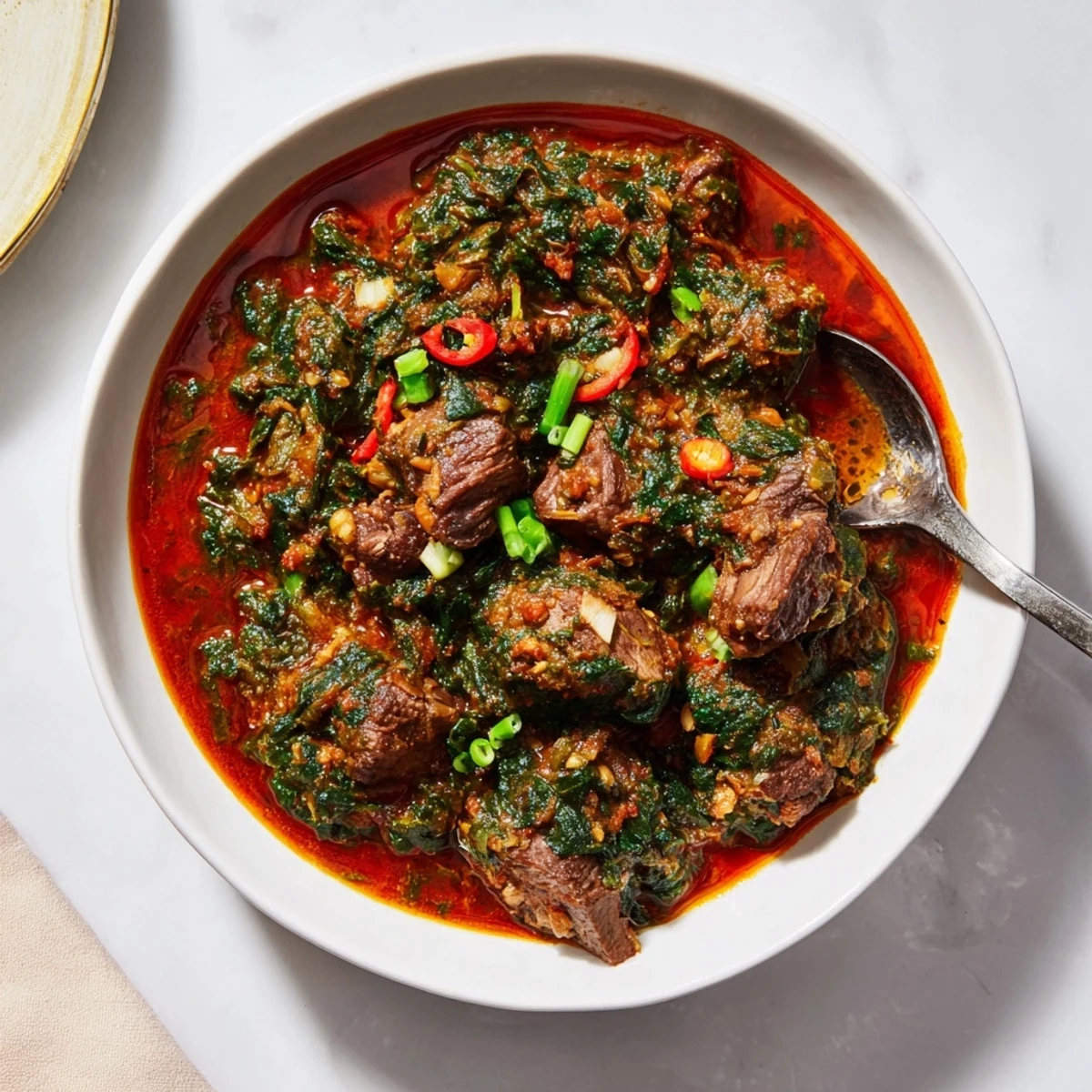
Save This vibrant West African dish combines tender beef chunks with fresh spinach in a deeply flavorful tomato and pepper base. The authentic preparation calls for red bell peppers, scotch bonnets, and aromatic spices like ground crayfish and dried shrimp, all simmered in rich palm oil until the sauce thickens and the oil floats to the top—signaling perfect doneness. The result is a hearty, aromatic stew that balances heat from the peppers with the earthy depth of traditional Nigerian seasonings. Perfect served alongside jollof rice, pounded yam, or enjoyed on its own for a satisfying meal that brings the bold flavors of West Africa to your table.
The steam rising from my pot still takes me back to my aunt's tiny kitchen in Lagos, where she'd cook Efo Riro in a weathered aluminum pot that had seen decades of stews. I remember watching her transform fresh spinach into something magical, the way the palm oil would separate and float to the top like liquid gold. That first taste changed everything I thought I knew about vegetables.
Last winter, during a particularly brutal cold snap, I made a massive pot for my roommates who had never tried Nigerian food before. They hovered around the stove, drawn by the intoxicating aroma of frying peppers and spices. When we finally sat down to eat with steamed rice, the room went completely silent except for the clinking of spoons against bowls.
Ingredients
- 500 g beef stew meat: Chuck or stewing beef works beautifully here, becoming tender as it simmers in the seasoned broth
- 1 teaspoon salt and 1/2 teaspoon black pepper: This initial seasoning penetrates the meat, building flavor from the inside out
- 500 g fresh spinach: The heart of this dish, roughly chopped so it wilts evenly into the sauce
- 2 red bell peppers: Provide sweetness and body to the pepper base, balancing the heat
- 2 medium tomatoes: Add natural acidity and help create that rich, velvety texture
- 1 medium onion: Half goes into the beef broth, half into the pepper blend for layered flavor
- 2 scotch bonnet peppers: The signature heat that makes this authentically West African, adjust to your tolerance
- 2 cloves garlic: Minced and briefly fried in the palm oil to release its aromatic oils
- 1/4 cup palm oil: Traditional and essential for that authentic red orange hue and distinct flavor
- 1 tablespoon ground crayfish: Optional but deeply traditional, adding a seafood note that rounds out the flavor profile
- 1 tablespoon ground dried shrimp: Another umami booster that creates complexity
- 2 teaspoons paprika and 1/2 teaspoon cayenne: Build layers of warmth without overwhelming the palate
- 2 bouillon cubes: Maggi or Knorr cubes add that savory depth West African cooking is known for
Instructions
- Season and boil the beef:
- Season your beef chunks with salt and pepper, then place them in a large pot with half the chopped onion and enough water to cover everything. Bring it to a rolling boil, then reduce to a gentle simmer for about 20 minutes until the meat is tender enough to fall apart when pressed. Drain the beef but save every drop of that flavorful stock, it's liquid gold for later.
- Blend the pepper base:
- While the beef simmers, toss your red bell peppers, tomatoes, remaining onion, and scotch bonnets into a blender and blitz until completely smooth. This vibrant red paste is the foundation of your stew, so take your time getting it silky and uniform.
- Fry the aromatics:
- Heat your palm oil in a large saucepan over medium heat until it's hot but not smoking. Toss in the minced garlic and let it sizzle for just 30 seconds, watching carefully so it doesn't burn.
- Cook down the pepper base:
- Pour in that beautiful red pepper blend and stir frequently for 10 to 12 minutes. You'll know it's ready when the mixture has thickened considerably and you see those signature droplets of oil floating to the top, a sign the flavors have concentrated properly.
- Combine and simmer:
- Add your cooked beef to the pot along with a cup of that reserved beef stock. Stir in the crayfish, dried shrimp, cayenne, paprika, and crushed bouillon cubes, then let everything simmer together for another 8 to 10 minutes so the flavors can become best friends.
- Add the spinach:
- Fold in your chopped spinach and watch it collapse into the stew. Cook for just 3 to 5 minutes more, until the spinach is perfectly wilted and the sauce has thickened to a rich, coating consistency. Taste and adjust the salt and pepper until it sings.
 Save
Save This recipe became my go to comfort food during graduate school when I was missing home and needed something that felt like a hug in a bowl. The rhythm of chopping, blending, and stirring became meditative, and the smell always made my tiny apartment feel infinitely warmer and more welcoming.
Making It Your Own
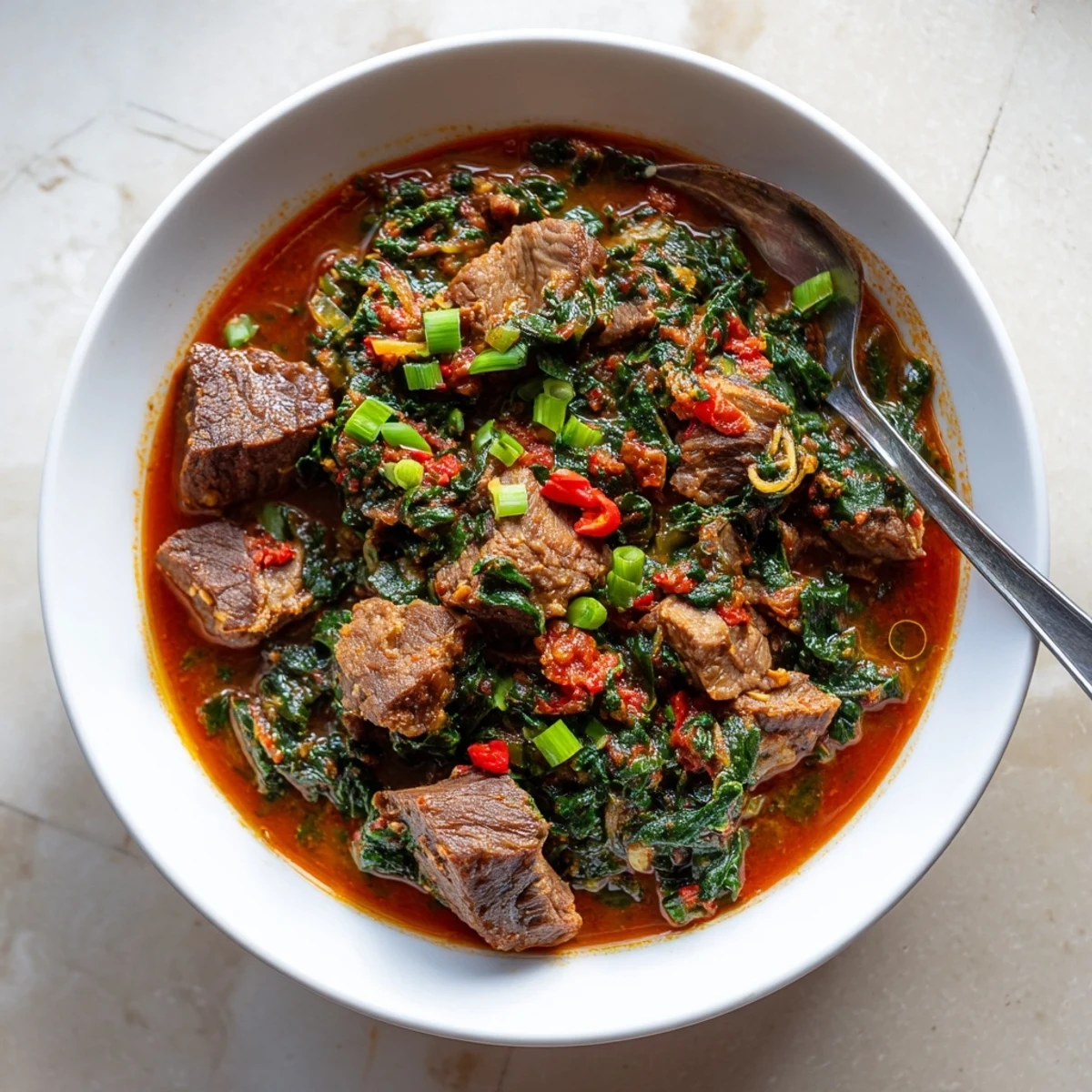
While traditional Efo Riro includes assorted meats like tripe or cow foot, I've learned that a simple beef version still delivers incredible satisfaction. You can add smoked fish or stockfish during the simmering stage for an extra layer of depth that truly elevates the dish.
Serving Suggestions
This stew deserves to be served with something that can soak up all that glorious sauce. White rice is the most common pairing, but try it with pounded yam, fufu, or even alongside some jollof rice for a true feast.
Storage and Meal Prep
Efo Riro is one of those magical dishes that actually improves after a day in the refrigerator. The flavors continue to develop and mingle, making it excellent for meal prep or Sunday cooking.
- Store in airtight containers in the refrigerator for up to 4 days
- Freeze portions for up to 3 months if you want to keep some on hand
- Reheat gently over low heat, adding a splash of water if the sauce has thickened too much
 Save
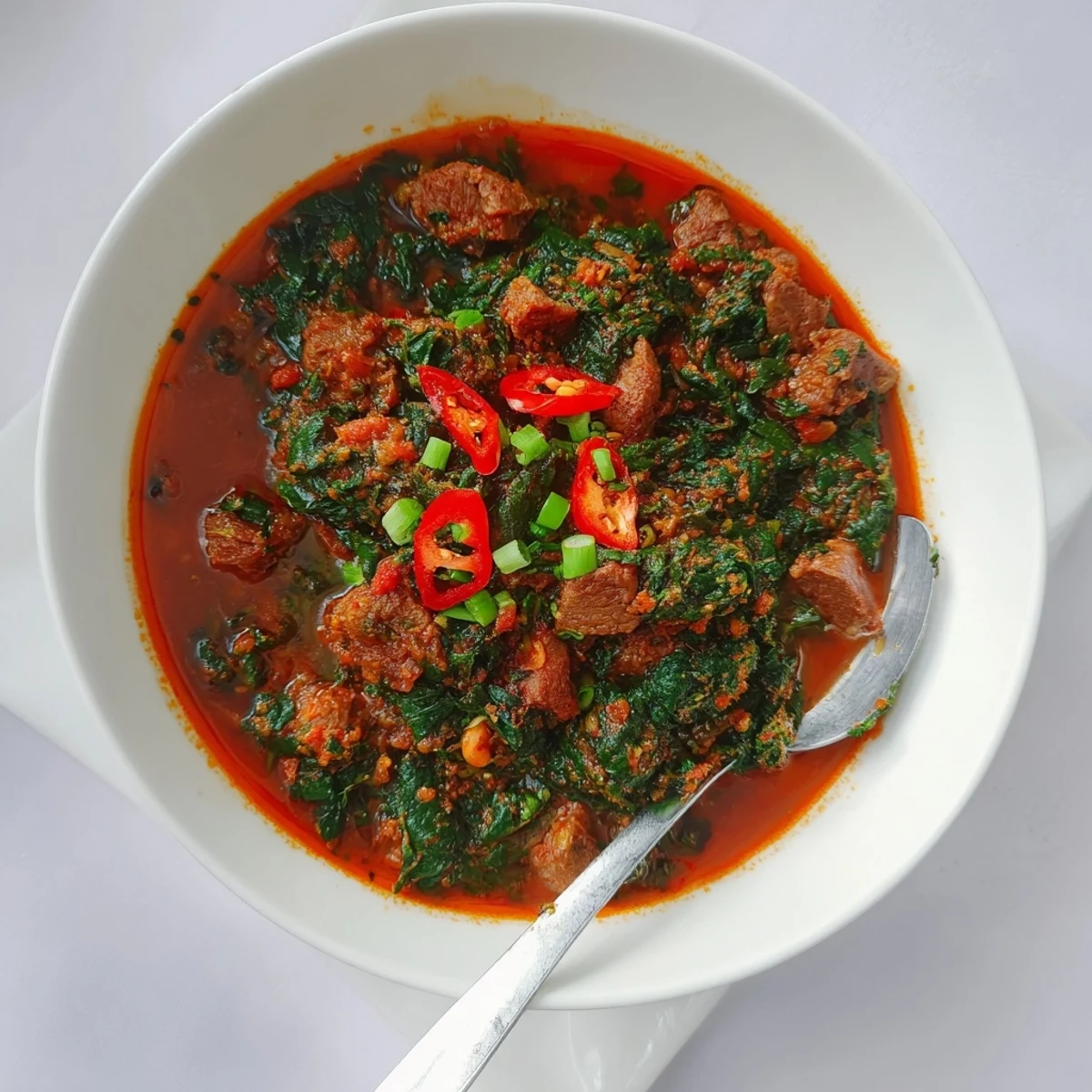
Save There's something deeply nourishing about this stew, not just for the body but for the soul. Every spoonful carries generations of wisdom and the simple profound joy of feeding people you love.
Recipe Questions & Answers
- → What makes Efo Riro authentic?
-
Authentic Efo Riro relies on palm oil for its characteristic red color and distinct flavor, along with traditional ingredients like ground crayfish and dried shrimp. The technique of cooking the pepper base until oil separates and floats to the top is essential for developing the deep, rich flavors that define this Nigerian classic.
- → Can I make this less spicy?
-
Absolutely. Reduce or omit the scotch bonnet peppers entirely, and cut back on the cayenne pepper. The red bell peppers still provide plenty of flavor without overwhelming heat. You can always add fresh chili at the table as a garnish for those who enjoy extra spice.
- → What can I substitute for palm oil?
-
Vegetable oil works well as a substitute, though it lacks the distinctive red color and subtle earthy flavor of palm oil. For closer authenticity, try mixing a small amount of annatto oil with vegetable oil to achieve that traditional golden-red hue while keeping the dish accessible.
- → How should I serve Efo Riro?
-
Traditional pairings include jollof rice, fufu, pounded yam, or boiled plantains. It also pairs beautifully with plain white rice, quinoa, or even crusty bread to soak up the rich sauce. The stew is substantial enough to stand alone as a complete meal with its protein and vegetable components.
- → Can I use frozen spinach?
-
Yes, frozen spinach works perfectly well. Thaw and drain it thoroughly before adding to the stew. Use about 350 grams frozen to equal 500 grams fresh, and add it slightly earlier since frozen spinach releases more moisture and needs a bit more time to integrate into the sauce.
- → How long does this keep?
-
Efo Riro actually tastes better the next day as flavors continue to develop. Store in an airtight container in the refrigerator for up to 4 days, or freeze for up to 3 months. Reheat gently on the stove, adding a splash of water or stock if needed to restore consistency.