
 Save
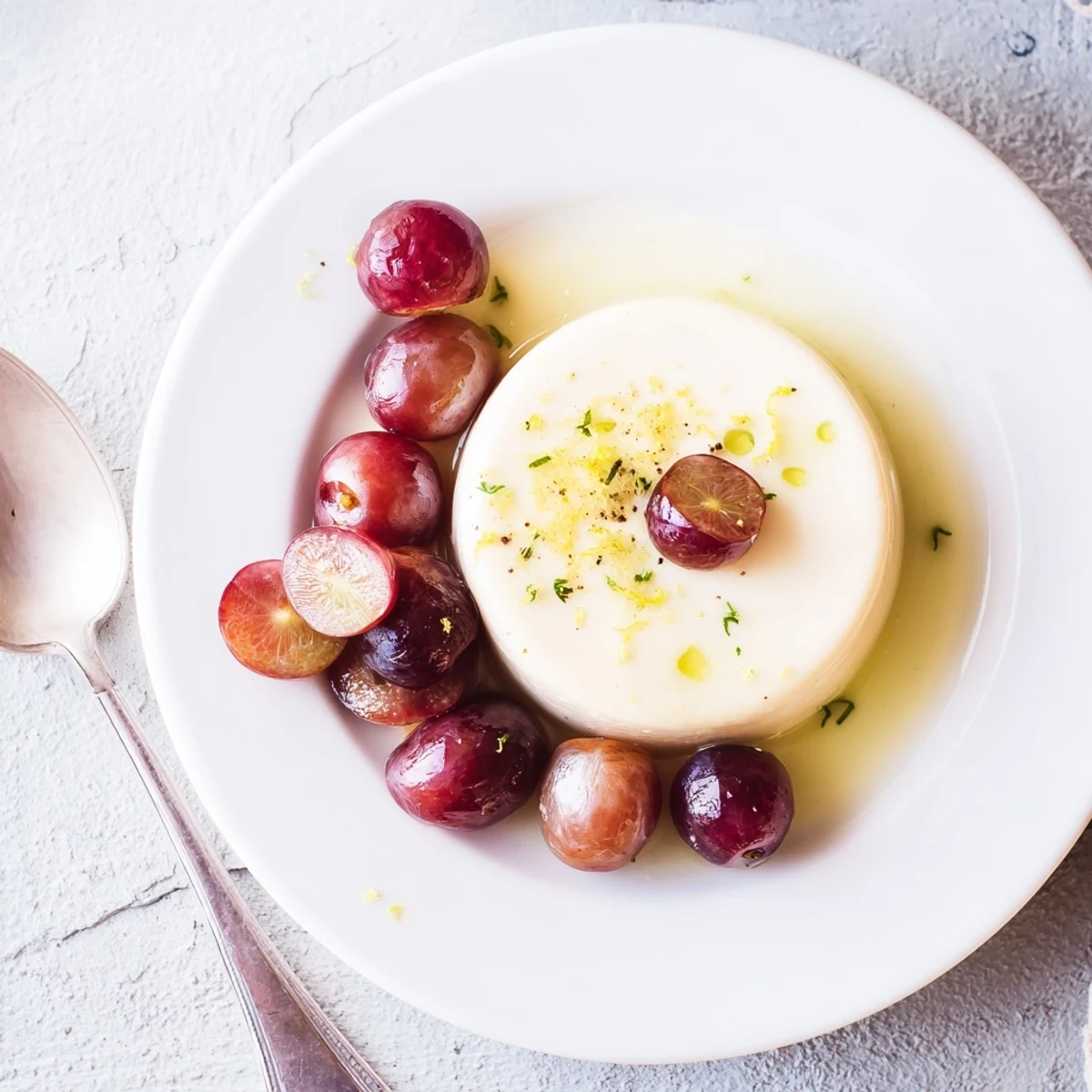
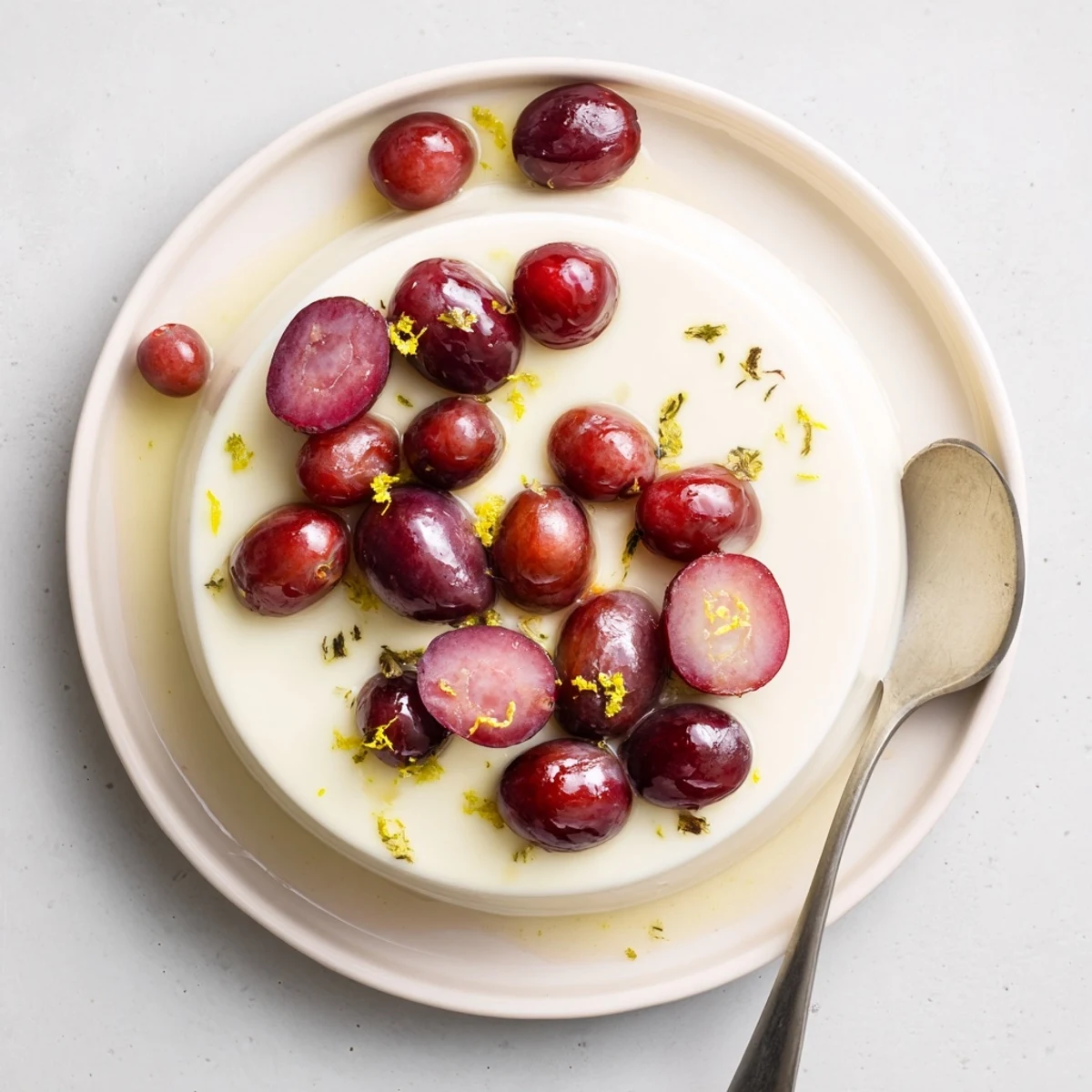
Save This elegant Italian dessert features a silky lemon-infused cream base, perfectly complemented by grapes prepared two distinct ways. The roasted grapes become soft, caramelized, and concentrated in sweetness, while fresh grape halves provide bright pops of juicy acidity. Together, they create a beautiful balance of temperatures and textures against the smooth, velvety panna cotta. The preparation is straightforward—simply heat the cream mixture with lemon zest, dissolve gelatin, and chill until set. Finish by arranging both warm roasted and cool fresh grapes alongside each serving for maximum visual appeal and flavor complexity.
The first time I made lemon panna cotta, I accidentally added too much gelatin and ended up with something closer to a rubber eraser than a silky dessert. My husband still laughs about how his spoon practically stood upright in the bowl. That kitchen disaster taught me everything about respecting the delicate balance between structure and silkiness, and now this recipe is one I can make without even measuring.
Last summer, I served this at a dinner party where my friend Sarah, who claims to not like dessert, went back for seconds. The way the roasted grape juices mingle with the cool, wobbly panna cotta creates this perfect moment of flavors that makes people go quiet around the table. Now it is my go-to when I want to impress without actually trying that hard.
Ingredients
- Heavy cream: Provides that luxurious, velvety mouthfeel that makes panna cotta feel indulgent
- Whole milk: Lightens the cream slightly so the dessert does not feel too heavy on the palate
- Granulated sugar: Balances the bright acidity from the fresh lemon juice
- Lemon zest: Infuses the cream mixture with fragrant citrus oils before you even add the juice
- Freshly squeezed lemon juice: Adds that signature tangy brightness that cuts through the rich dairy
- Unflavored powdered gelatin: The secret to that perfect gentle wobble, not too firm and not too loose
- Cold water: Essential for properly blooming the gelatin so it dissolves evenly
- Pure vanilla extract: Rounds out all the flavors and adds a warm, comforting background note
- Pinch of salt: Enhances all the other flavors and keeps the sweetness from being cloying
- Seedless red or black grapes: Roasting half transforms them into something jammy and intense while keeping the other half fresh for contrast
- Olive oil: Helps the grapes caramelize beautifully in the oven and adds a subtle richness
- Honey: Encourages the grapes to brown and develop those deep roasted flavors
- Fresh thyme leaves: An optional herbal note that makes the dish feel more sophisticated and grounded
Instructions
- Bloom the gelatin:
- Sprinkle the gelatin evenly over two tablespoons of cold water in a small bowl and let it sit for about five minutes until it absorbs the liquid and becomes spongy.
- Warm the dairy mixture:
- Combine the cream, milk, sugar, lemon zest, and salt in a saucepan over medium heat, stirring occasionally until the mixture is just steaming and the sugar has dissolved completely.
- Dissolve the gelatin:
- Whisk the bloomed gelatin into the warm cream mixture until it is fully dissolved, then remove from heat.
- Add the citrus:
- Stir in the lemon juice and vanilla extract, whisking until everything is smoothly combined.
- Strain and pour:
- Pour the mixture through a fine mesh sieve into a measuring jug to remove any bits of lemon zest or undissolved gelatin, then divide evenly among your prepared ramekins or glasses.
- Chill until set:
- Let the panna cottas cool to room temperature, then refrigerate for at least four hours or until they are firm and gently jiggly.
- Roast half the grapes:
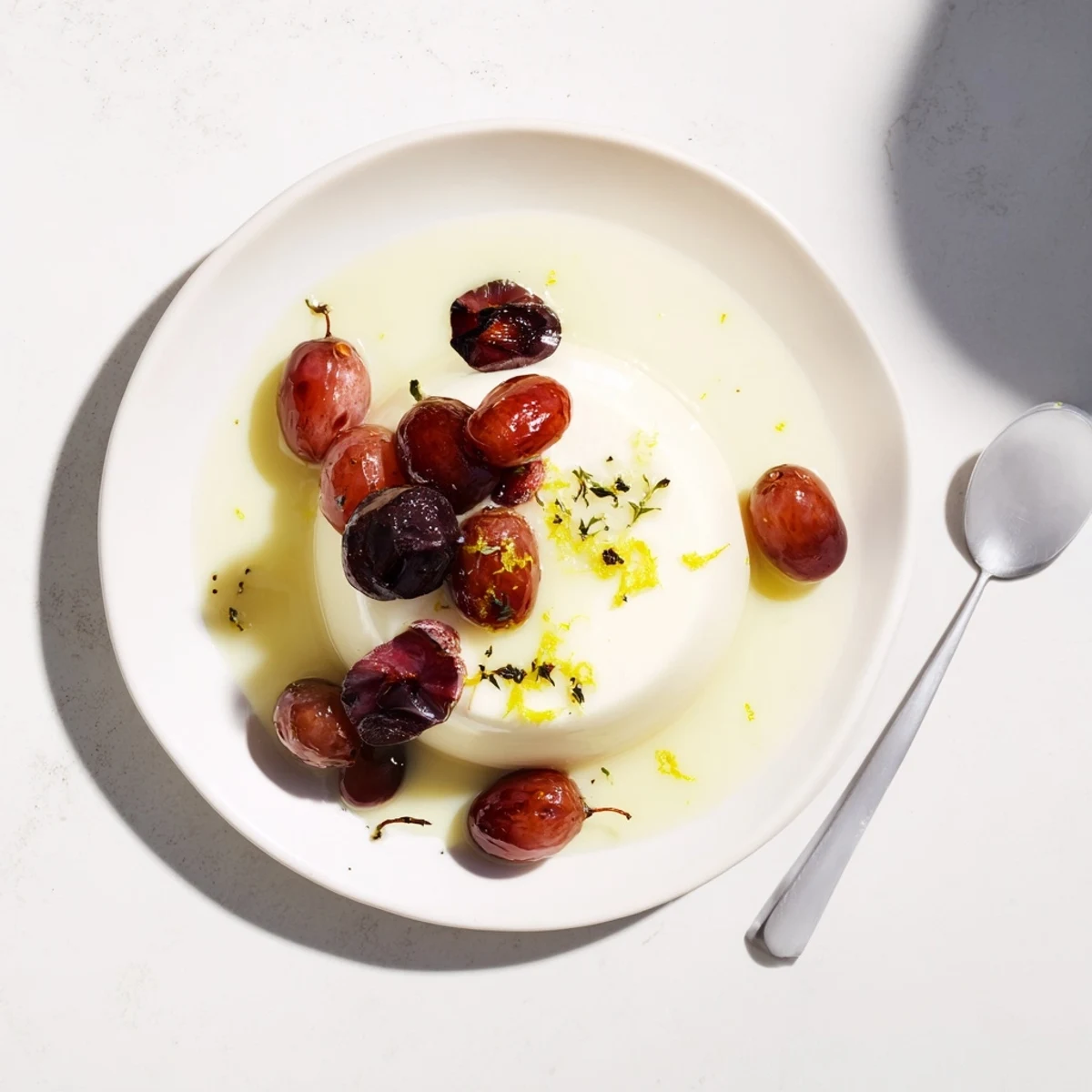
- Toss one cup of grapes with olive oil, honey, and thyme on a parchment-lined baking sheet and roast at 400 degrees for ten to twelve minutes until they are soft and beginning to caramelize.
- Prep the fresh grapes:
- While the roasted grapes cool, slice the remaining cup of grapes in half and keep them chilled.
- Assemble and serve:
- Unmold the panna cottas onto plates or serve directly in the glasses, then spoon some roasted grapes and their juices on one side and scatter fresh grape halves on the other.
 Save
Save My daughter helped me make this for her birthday last year, and she was so fascinated watching the liquid transform into something creamy and set in the refrigerator. Now she asks for it every time we have special occasions.
Make It Ahead
The panna cotta itself can be made up to two days in advance and kept covered in the refrigerator, which makes it perfect for dinner parties. Roast the grapes the day you plan to serve them, as they are best within a few hours of coming out of the oven.
Serving Suggestions
A crisp glass of Moscato dAsti or Prosecco pairs beautifully with the citrus and grape flavors, cutting through the richness of the cream. I also love serving this with a simple shortbread cookie on the side for texture.
Flavor Variations
Once you master the basic technique, the flavor possibilities are endless. I have made this with roasted stone fruits in the summer and spiced poached pears in the fall.
- Swap lemon for lime and top with roasted pineapple for a tropical twist
- Use orange blossom honey instead of regular honey with the roasted grapes
- Add a tablespoon of mascarpone to the cream mixture for extra richness
 Save
Save There is something deeply satisfying about serving a dessert that looks elegant but comes together with such simple ingredients and techniques. Hope it becomes a favorite in your kitchen too.
Recipe Questions & Answers
- → What makes the grapes special in this dessert?
-
The grapes are prepared two ways—roasted until soft and caramelized with honey and thyme, plus fresh halves that provide bright juiciness. This creates warm and cool elements with concentrated versus fresh flavors.
- → Can I make this ahead of time?
-
Absolutely. The panna cotta needs at least 4 hours to set, making it perfect for preparing a day ahead. Roast the grapes just before serving, as they're best warm.
- → What if I don't have gelatin?
-
You can substitute agar-agar for a vegetarian version, though quantities differ slightly. Powdered gelatin is traditional for the smoothest, most delicate texture.
- → How do I unmold panna cotta cleanly?
-
Dip the ramekin briefly in warm water, run a thin knife around the edge, then invert onto a plate. Alternatively, serve directly in glasses for a more casual presentation.
- → Can I use other fruits?
-
Roasted figs, berries, or stone fruits work beautifully. The key is pairing something that roasts well with fresh versions for that warm-cool contrast.