
 Save
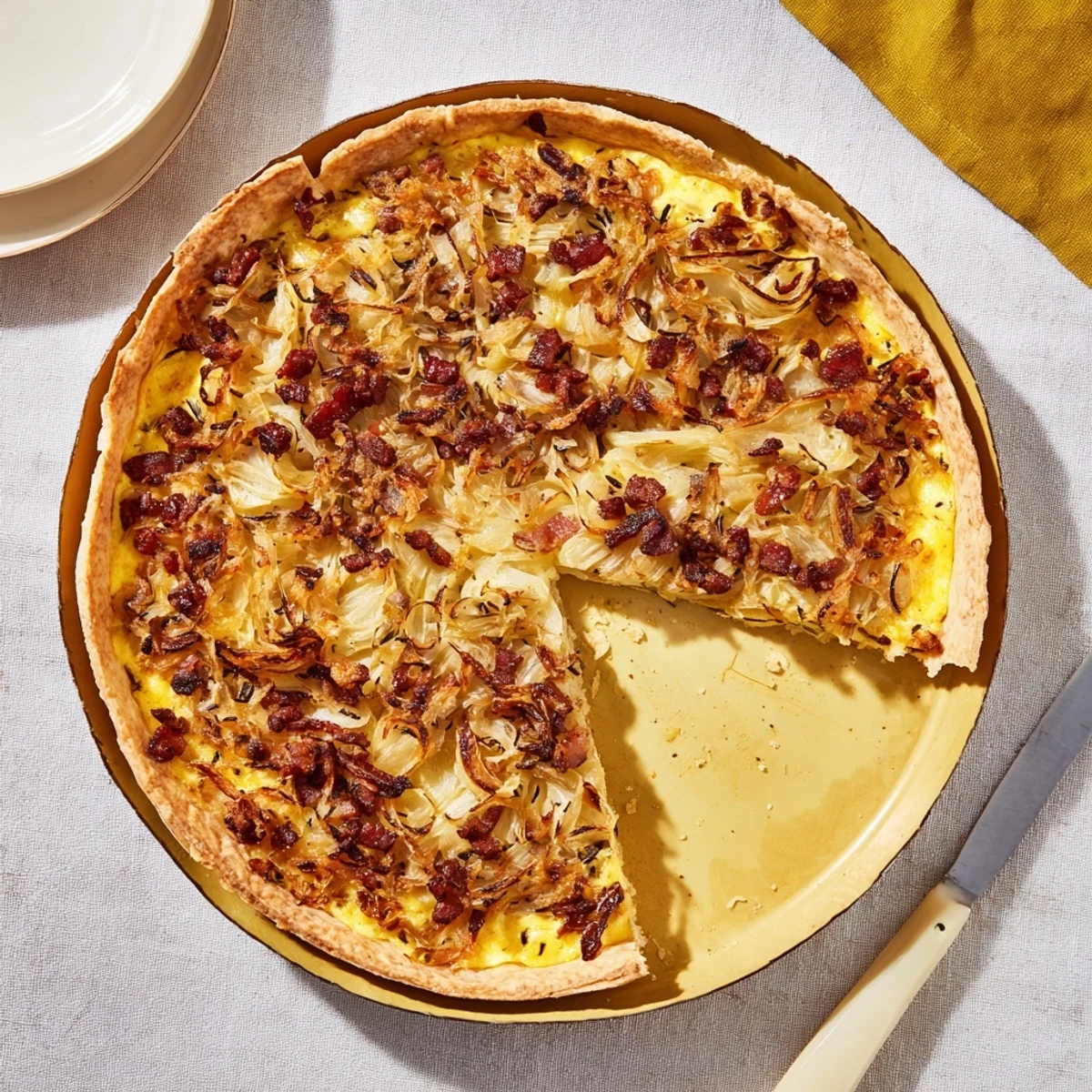
Save This traditional German tart, known as Zwiebelkuchen, combines the natural sweetness of slowly caramelized yellow onions with the savory depth of thick-cut bacon. The onions are cooked gently until golden and meltingly tender, then layered across a buttery homemade crust and finished with a luxurious custard of heavy cream, whole milk, eggs, and nutty Emmental cheese. Baked until the filling is set and golden, this dish balances the earthiness of caraway seeds with the warmth of nutmeg and black pepper. Perfect served warm with a crisp Riesling or alongside fresh sauerkraut and a simple green salad for an authentic German dining experience.
The first time I encountered Zwiebelkuchen was at a bustling Oktoberfest celebration in Munich, where the scent of caramelized onions and bacon drifted through the autumn air like an invitation. I stood in line at a small food stall, watching steam rise from paper plates, and took my first bite while standing at a communal table surrounded by strangers who quickly became friends. That evening taught me that some dishes are meant to be shared, their aromas pulling people together in ways that nothing else can.
Last autumn, I made this pie for a small dinner party on a rainy Sunday. The kitchen filled with the most incredible aroma as the onions slowly caramelized, and my guests kept wandering in, asking what smelled so good. We ended up eating it standing around the kitchen island, warm slices in hand, while rain tapped against the windows.
Ingredients
- 2 cups all-purpose flour: The foundation of a tender, flaky crust that holds up beautifully to the creamy filling
- 1/2 teaspoon salt: Essential for balancing flavors and enhancing the natural sweetness of the onions
- 1/2 cup cold unsalted butter, cubed: Cold butter is the secret to creating those irresistible flaky layers in your pastry
- 1 large egg: Provides richness and helps bind the dough together for easy rolling
- 2–3 tablespoons cold water: Just enough to bring the dough together without making it tough
- 1 lb yellow onions, thinly sliced: Yellow onions caramelize beautifully, developing a deep sweetness that anchors the entire dish
- 5 oz thick-cut bacon, diced: Adds smoky depth and texture, though this can be omitted for vegetarians
- 1/2 teaspoon caraway seeds: A classic German touch that adds subtle earthiness and authenticity
- 1/4 teaspoon freshly grated nutmeg: A whisper of warmth that complements the cream and onions surprisingly well
- 1 cup heavy cream: Creates the luxurious, custard-like texture that makes this tart so satisfying
- 1/2 cup grated Emmental or Gruyère cheese: Adds nutty complexity and helps the custard set perfectly
Instructions
- Prepare the pastry dough:
- In a large bowl, combine flour and salt, then cut in cold butter until the mixture looks like coarse crumbs. Add the egg and just enough cold water to form a soft dough that holds together when pressed. Shape it into a disk, wrap it well, and let it chill in the refrigerator for 30 minutes while you prepare the filling.
- Roll and prep the crust:
- Preheat your oven to 375°F (190°C). Roll out the chilled dough on a lightly floured surface until it fits your 9-inch tart or pie pan. Press it gently into the pan, trim any excess from the edges, and prick the base all over with a fork. Keep it chilled until you are ready to fill it.
- Caramelize the onions:
- In a large skillet, melt butter over medium heat and cook the bacon until just crisp. Remove the bacon and set it aside, then add the sliced onions to the same pan. Cook them gently, stirring often, for 15–20 minutes until they are golden and very soft. Stir in the caraway seeds, salt, pepper, and nutmeg, then remove from heat and mix in the bacon.
- Make the custard:
- In a medium bowl, whisk together the heavy cream, whole milk, eggs, and grated cheese until completely smooth and well combined.
- Assemble and bake:
- Spread the onion mixture evenly over the prepared crust, then pour the custard over the onions. Bake for 40–45 minutes until the filling is set and lightly golden on top. Let the tart cool for 10 minutes before slicing into wedges.
 Save
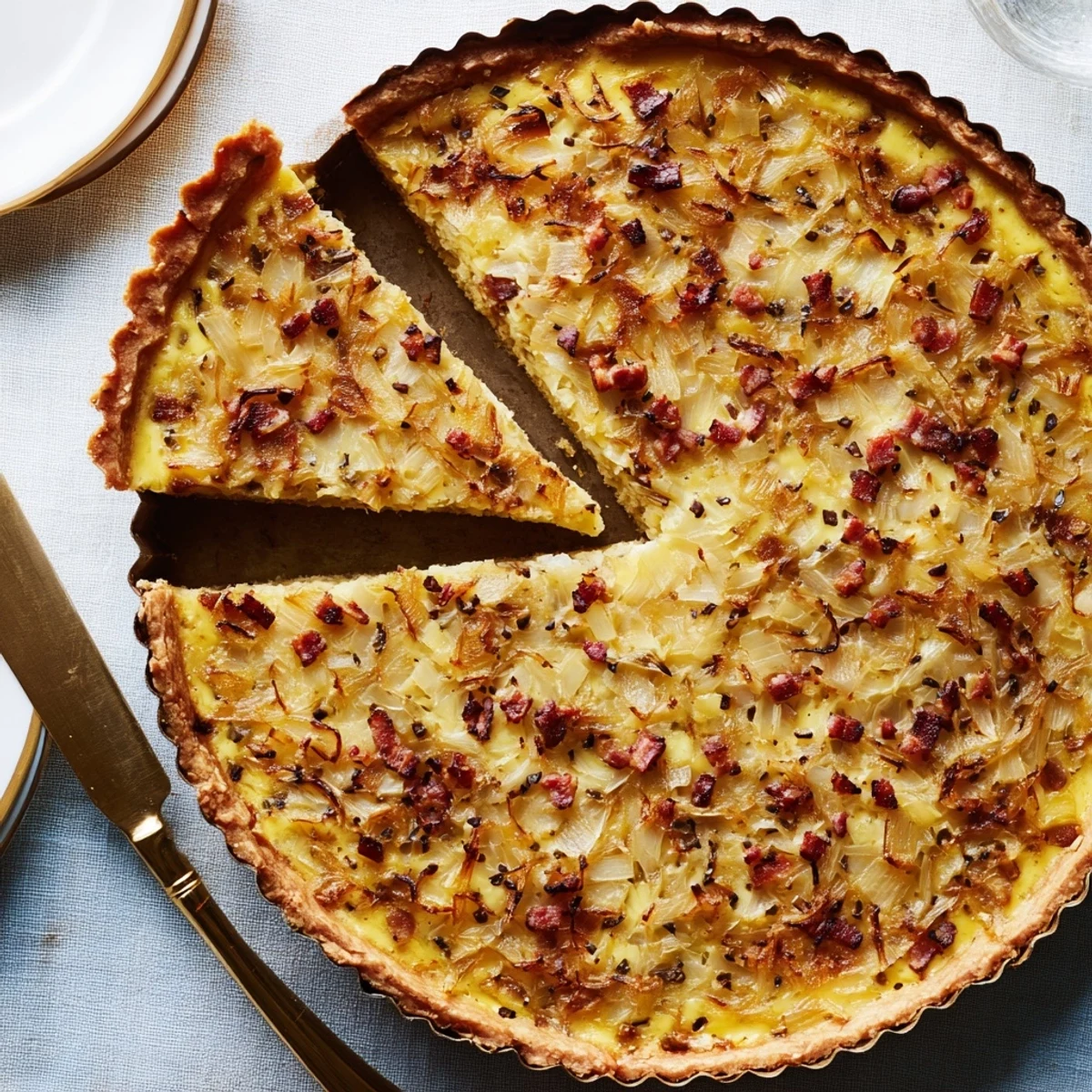
Save My mother-in-law, who grew up in Bavaria, told me that Zwiebelkuchen was traditionally served with new wine in autumn. I have since made it an annual tradition to bake this pie when the leaves start turning, pouring glasses of crisp Riesling and remembering her stories about harvest feasts in her village.
The Secret to Perfect Caramelized Onions
After years of burning onions or ending up with mushy ones, I finally learned that low and slow is the only way. Cook them over medium-low heat, stirring frequently, and do not try to rush the process. The onions should turn a deep golden brown and practically melt in your mouth.
Making It Vegetarian
Omitting the bacon still yields a delicious tart, especially if you add a handful of smoked tofu or an extra half-cup of cheese. Some mushrooms, sautéed alongside the onions, can also add that savory depth that bacon normally provides.
Serving Suggestions
This tart shines alongside a simple green salad dressed with a sharp vinaigrette, which cuts through the richness. A spoonful of sauerkraut on the side adds a bright, tangy contrast that feels authentically German.
- Let the tart cool for at least 10 minutes before slicing, or the custard may not hold its shape
- Leftovers reheat beautifully in a 350°F oven for about 15 minutes
- This pie freezes well wrapped tightly for up to two months
 Save
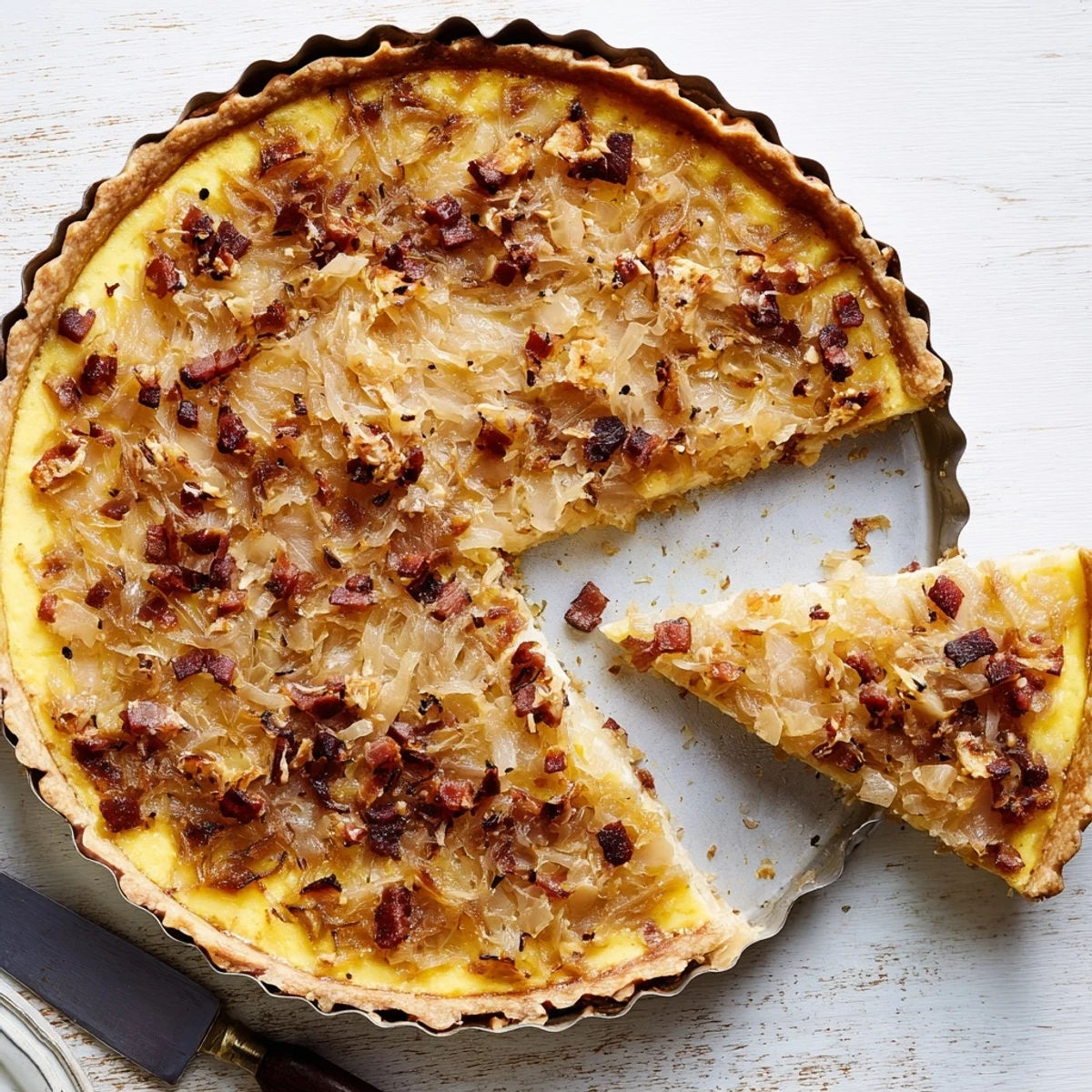
Save There is something deeply comforting about a dish that has been perfected over generations, passed down through families, and shared across tables. I hope this German onion pie finds its way into your own autumn traditions.
Recipe Questions & Answers
- → Can I make German onion pie vegetarian?
-
Simply omit the bacon or replace it with smoked tofu cubes for a vegetarian version. The smoky flavor from the tofu provides a similar depth while maintaining the dish's savory character.
- → How long does German onion pie keep?
-
The tart can be stored in the refrigerator for up to 3 days. Reheat gently in a 325°F oven for 10-15 minutes to restore the crispness of the crust and warmth of the filling.
- → What is the best way to achieve properly caramelized onions?
-
Cook the sliced onions over medium heat with butter for 15–20 minutes, stirring frequently. They should turn golden brown and become very soft, almost melting in texture. This slow cooking process develops their natural sugars.
- → Can I prepare the pastry ahead of time?
-
Yes, the dough can be made up to 2 days in advance and kept wrapped tightly in the refrigerator. You can also freeze the unbaked dough for up to 3 months before thawing in the refrigerator overnight.
- → What wine pairs well with German onion pie?
-
A crisp German white wine like Riesling or Gewürztraminer complements the rich, savory flavors beautifully. For a traditional autumn experience, serve with Federweißer, a partially fermented young wine.
- → Can I use a different cheese in the custard?
-
While Emmental and Gruyère are traditional choices, you can substitute with Swiss cheese, Fontina, or a sharp cheddar. Each will bring a slightly different character to the finished tart.