
 Save
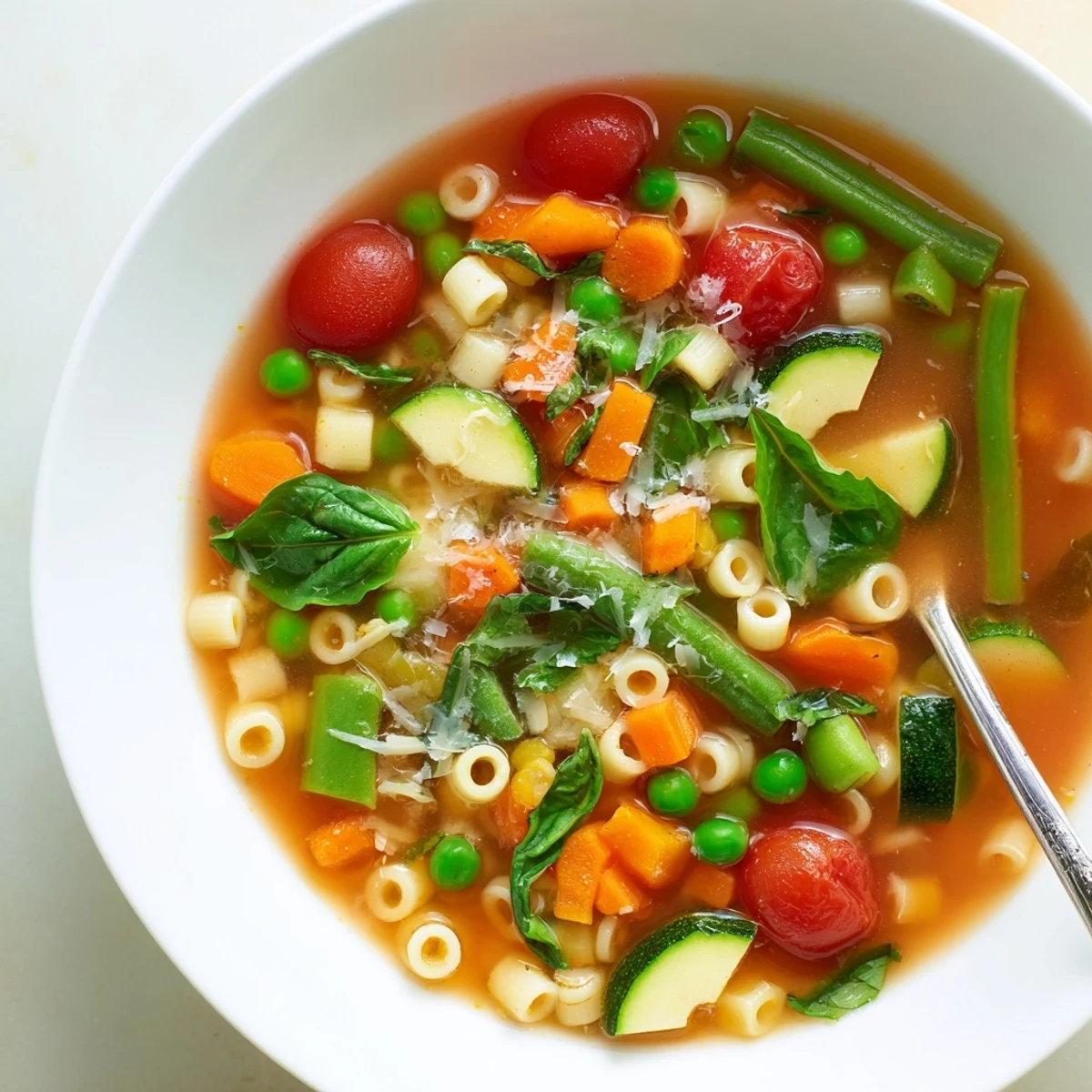
Save This spring minestrone highlights tender carrots, zucchini, peas, green beans and cherry tomatoes simmered in a light vegetable broth with ditalini pasta. Begin by sautéing onion and garlic, then soften carrots and celery before adding the rest. Simmer until the pasta is al dente, stir in spinach and fresh herbs, and finish with a drizzle of olive oil and grated Parmesan or a vegan alternative.
Steam fogged the kitchen windows as I chopped away, the gentle clatter of knives and the grassy scent of fresh basil marking the start of spring. There’s something energizing about gathering so many shades of green into a single soup pot, each one hinting at longer days ahead. I first threw together this minestrone on an impulsive grocery run, grabbing every tender veggie that caught my eye — and every spoonful felt like a little celebration of the season’s arrival. Though my shoes were muddy from a quick walk to the market, the warmth and vibrant colors of this soup made it more than worth it.
I still laugh thinking about the time my friend stopped by right as the soup finished simmering—she claimed she could smell the garlic and dill from the hallway. We ended up eating on the porch, soup bowls in hand, watching rain clouds mouth the horizon and sharing stories that lingered as long as the meal itself.
Ingredients
- Olive oil: I always reach for a fruity olive oil, both for sautéing and for a final drizzle—its flavor really sings in this light soup.
- Yellow onion: Letting the onion gently sweat builds the savory backbone and lets all the other veggies shine.
- Garlic: Just a couple cloves, finely minced, unlock their aroma, so don’t rush this step.
- Carrots and celery: These classic base veggies mellow the brightness of spring greens and add sweet notes.
- Zucchini: I dice these on the smaller side so they become perfectly tender and never soggy.
- Shelled peas: Fresh peas pop with sweetness, but frozen ones are honestly just as good if you’re short on time.
- Green beans: Trimmed and chopped to bite size, these add a gentle crunch even after simmering.
- Baby spinach: Drop it in at the very end—wilting just enough while staying vibrantly green.
- Cherry tomatoes: Their sweet bursty flavor is essential for that sun-kissed taste in every bite.
- Vegetable broth: A good broth ties everything together—a store-bought low-sodium one keeps things light, but homemade is unbeatable if you’ve got scraps to spare.
- Small pasta: Ditalini and orzo hold up beautifully, soaking up flavor without getting mushy.
- Salt, black pepper, and red pepper flakes: The base trio—add a pinch more red pepper if you love a gentle kick like I do.
- Fresh basil, parsley, and dill: Chopped and stirred in at the end, these herbs bring the soup to life and leave your kitchen smelling like an herb garden.
- Parmesan cheese: Freshly grated is magical here—even just a dusting melts into creamy richness.
- Extra virgin olive oil: Don’t skip a final drizzle for a lush, glossy finish.
Instructions
- Build the Flavor Base:
- Pour olive oil into a large soup pot over medium heat. Sauté onion and garlic until they’re fragrant and translucent, stirring occasionally so nothing sticks.
- Add the Classics:
- Tumble in carrots and celery, letting them soften and pick up the aromatics for about 5 minutes.
- Bring in Spring Veggies:
- Add zucchini, green beans, and cherry tomatoes, stirring gently—listen for the gentle sizzle and notice the color brightening.
- Broth Bath:
- Pour in vegetable broth and let the soup come up to a happy gentle simmer, making sure everything’s submerged.
- Pasta & Peas Time:
- Stir in your chosen small pasta and the sweet green peas, simmering until the pasta goes toothsome and veggies soften but keep their spirit.
- Herb & Spinach Finale:
- Toss in baby spinach, basil, parsley, and dill, stirring just until spinach wilts and the soup smells garden-fresh; finish with salt, black pepper, and a touch of red pepper flakes.
- Serve & Savor:
- Ladle the soup into warm bowls, dust with Parmesan, and drizzle with extra virgin olive oil—throw on more herbs if you’re feeling fancy and serve right away.
 Save
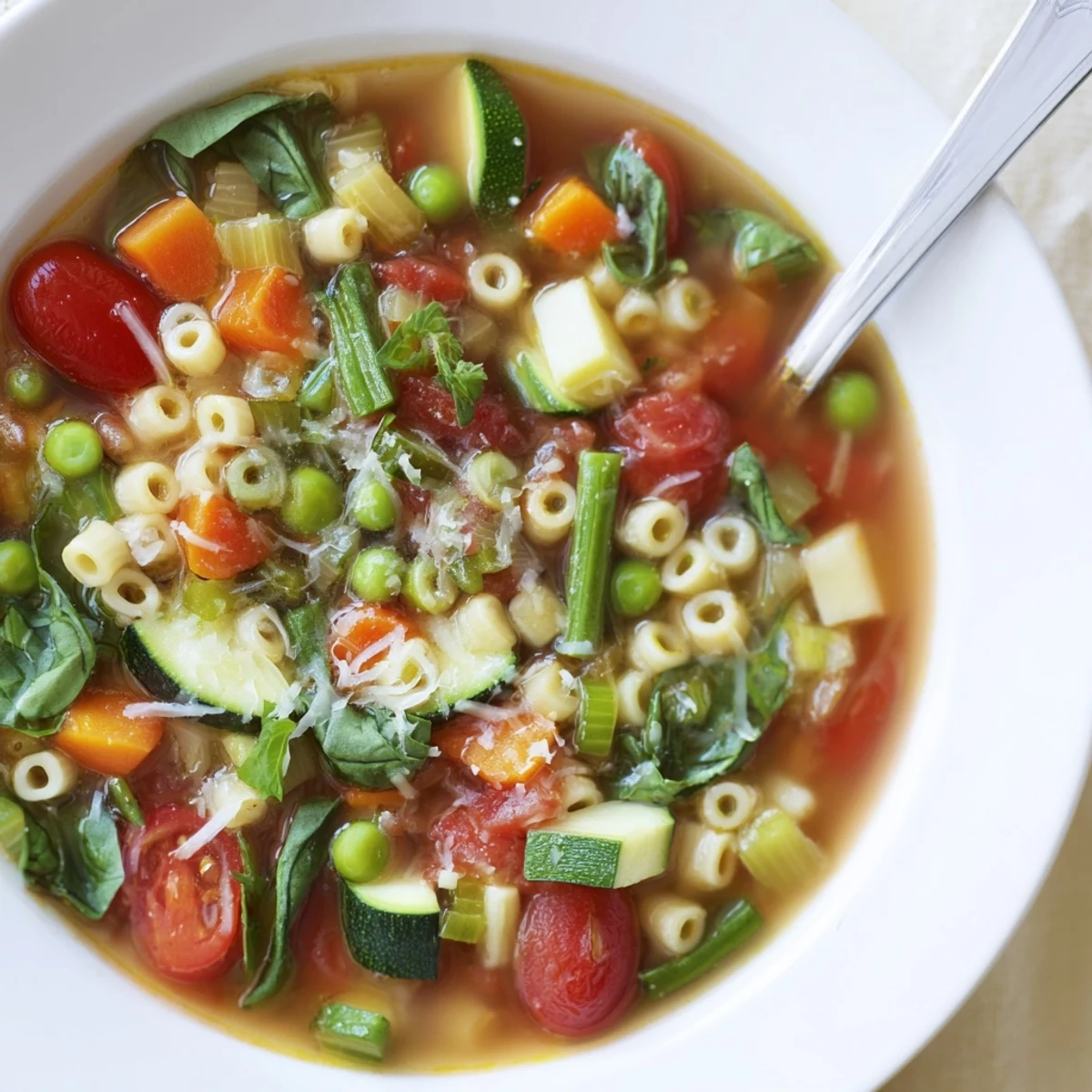
Save One evening after a wild, windy walk, this soup ended up on the table with the windows open and laughter bouncing off the walls—nobody cared that our socks were wet, because the kitchen smelled like hope and new beginnings. Sometimes a bowl of minestrone is less about eating and more about sharing warmth when you need it most.
My Favorite Ways to Swap Vegetables
I love tossing in asparagus tips, a handful of fava beans, or even chopped rainbow chard whenever they’re at their prime. Treat the recipe as an easygoing roadmap: if your garden or market is bursting with color, it’ll taste good in this soup.
Bread and Wine Pairings for the Weeknight Table
I’ve found that a crisp crust of sourdough and a glass of Pinot Grigio can elevate a simple minestrone to something almost festive. Even a store-bought baguette develops new meaning when dunked into this broth.
Small Tweaks that Make a Big Difference
After a few batches I learned to hold back a bit on the salt early on since the cheese brings its own savory punch. Changing up fresh herbs keeps each pot from ever tasting exactly the same — basil one week, parsley the next, you’ll always get a surprise.
- If you want extra protein, toss in canned cannellini beans near the end.
- To keep leftovers fresh, store the cooked pasta separately if you expect to have soup for days.
- No matter what, don’t skip the final drizzle of good olive oil—it’s pure magic.
 Save
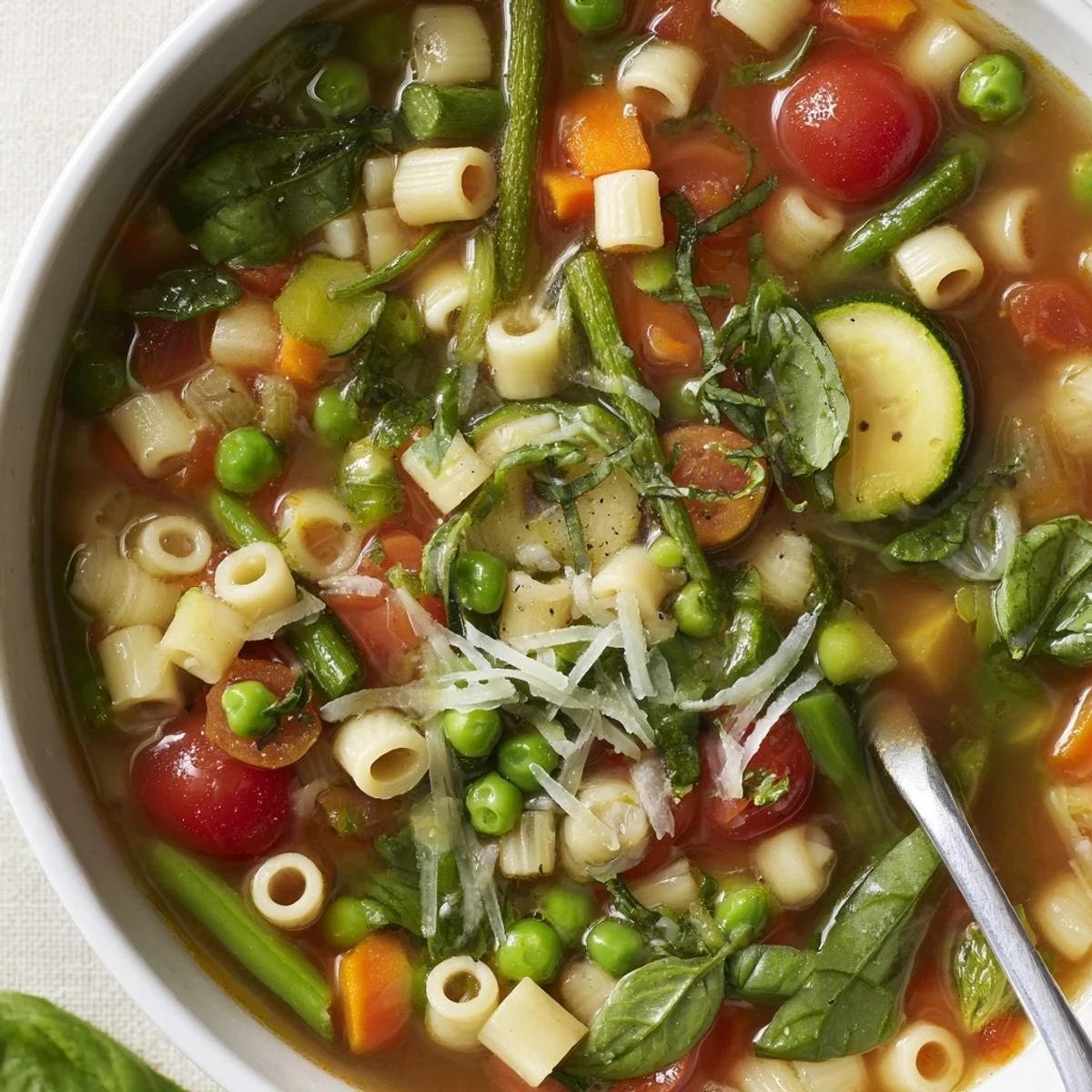
Save There’s nothing quite like a pot of spring minestrone to shake off the chill and welcome the sun. I hope it fills your kitchen with laughter, color, and the fresh scent of a season just beginning.
Recipe Questions & Answers
- → What pasta works best in this soup?
-
Small shapes like ditalini or orzo hold broth well and heat through quickly. Use gluten-free small pasta if needed and adjust cooking time to package directions.
- → How do I keep vegetables vibrant and not mushy?
-
Cook sturdier vegetables first and add delicate items like peas and spinach near the end. Simmer gently and test for just-tender texture to preserve color and bite.
- → Can I add beans for more protein?
-
Yes—canned or cooked cannellini or kidney beans are excellent. Stir them in when you add the pasta so they heat through without breaking apart.
- → How should I store and reheat leftovers?
-
Cool quickly and refrigerate up to 3–4 days. Reheat gently on the stove to avoid overcooking the pasta; add a splash of broth or water if it thickens.
- → What are good seasonal swaps for spring vegetables?
-
Try asparagus tips, fava beans, or baby artichokes in place of or alongside the listed vegetables to enhance spring flavors.
- → How can I make a vegan version without losing richness?
-
Omit the Parmesan and finish with a generous drizzle of good extra virgin olive oil, a squeeze of lemon, or a sprinkle of toasted nutritional yeast for umami.