
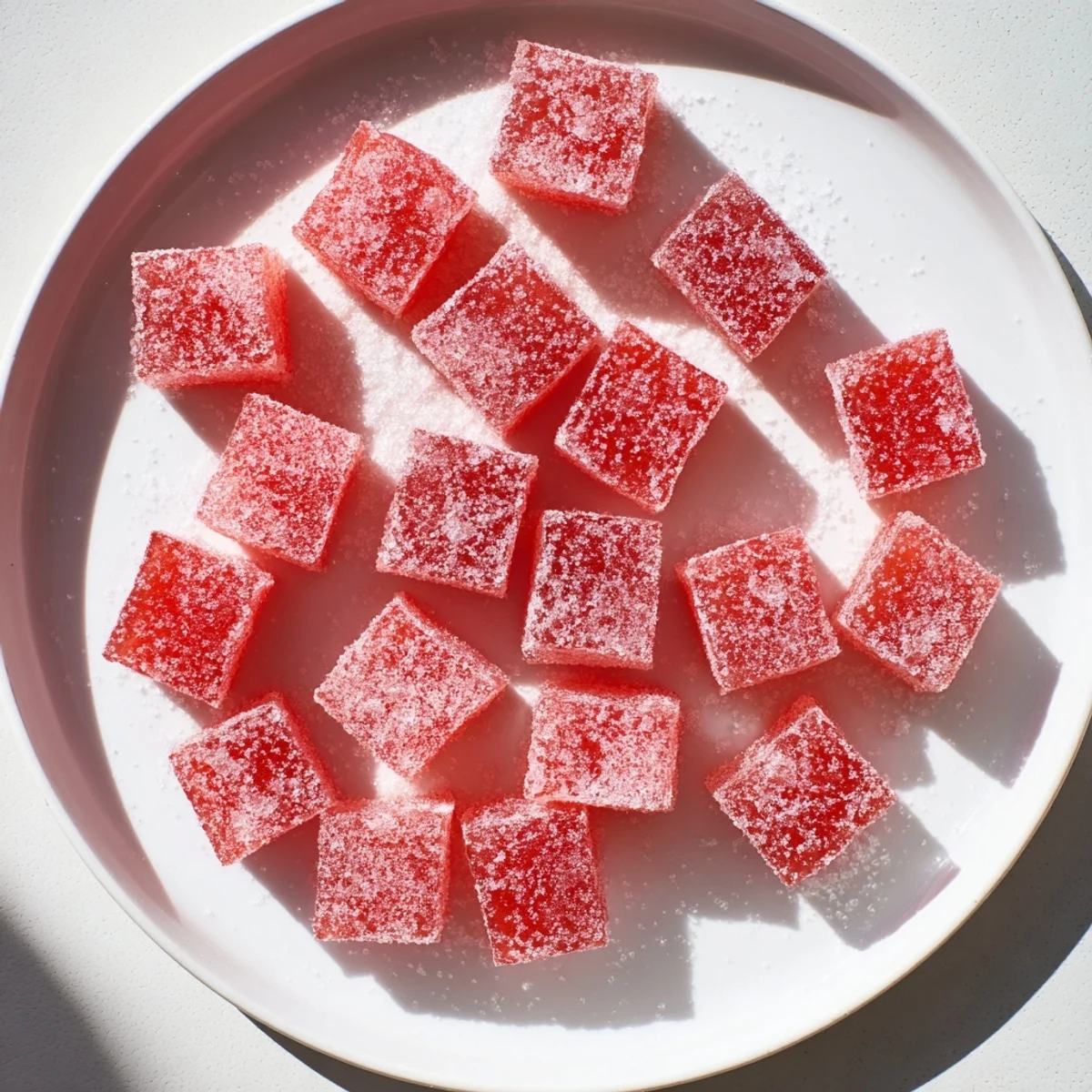
 Save
Save Create irresistible chewy watermelon candies that balance sweet and tangy flavors perfectly. These fruity treats start with fresh watermelon puree, combined with gelatin for that signature chewy texture, then finished with a zesty sugar-citric acid coating for mouth-puckering sourness.
The process involves blooming gelatin in fruit juice, gently heating until dissolved, then setting into firm squares. A final tumble through sour sugar creates that classic candy shop finish. Customize the tartness level by adjusting citric acid, or swap watermelon for other pureed fruits like strawberry, raspberry, or peach for variety.
Best enjoyed within a week when texture is perfectly chewy and coating remains crisp. Store layers separated by wax paper to prevent sticking.
The summer I discovered these chews, my kitchen counter was permanently sticky. I had bought way too much watermelon at the farmers market and refused to let any go to waste. My roommate walked in to find me surrounded by juice stains and saucepans, determined to turn that melon into something that would last longer than three days. Now these are the first thing people request when July rolls around.
Last summer I made three batches for a backyard barbecue. Watching kids and adults alike make that perfect pucker face when they first bit into the sour coating was worth every minute of stirring. My friend Sarah took home the leftovers and texted me the next day asking where I bought them. The look on her face when I explained I made them in my tiny apartment kitchen was priceless.
Ingredients
- Seedless watermelon puree: Fresh watermelon blended and strained gives you that authentic flavor you cannot get from extract. Trust me, I have tried the shortcuts.
- Unflavored gelatin powder: This creates that perfect chewy texture. Sprinkle it gently to avoid clumping, a mistake I made my first time.
- Citric acid powder: Find this in the canning aisle or online. It is what gives these their tongue tingling sour punch that makes them addictive.
- Granulated sugar: You will need some for the candy and extra for rolling. Do not try to reduce the sugar inside the candy, it affects the texture.
- Lemon juice: Brightens the watermelon flavor and helps activate the gelatin. Fresh squeezed makes a noticeable difference.
- Light corn syrup: Prevents sugar crystals from forming and keeps the chews soft and bendable.
Instructions
- Prep your workspace:
- Line an 8x8 inch pan with parchment paper and give it a light coating of oil. The parchment is crucial for lifting the set candy out later.
- Bloom the gelatin:
- Whisk watermelon puree, corn syrup, and lemon juice in a small saucepan. Sprinkle gelatin evenly over the surface and let it sit for 5 minutes until it looks like wet sand.
- Melt everything together:
- Add sugar and warm over medium low heat, stirring constantly. Watch carefully, you want everything dissolved but never boiling. The mixture should turn clear and smooth.
- Set the candy:
- Pour into your prepared pan and smooth the top. Let it cool at room temperature for 30 minutes before refrigerating for 2 hours until firm.
- Create the sour coating:
- Mix extra sugar and citric acid in a shallow bowl while the chews chill. The ratio here is personal taste, I lean heavier on the acid.
- Cut and coat:
- Lift the candy from the pan and cut into small squares with a sharp knife. Toss each piece in the sour sugar until fully coated.
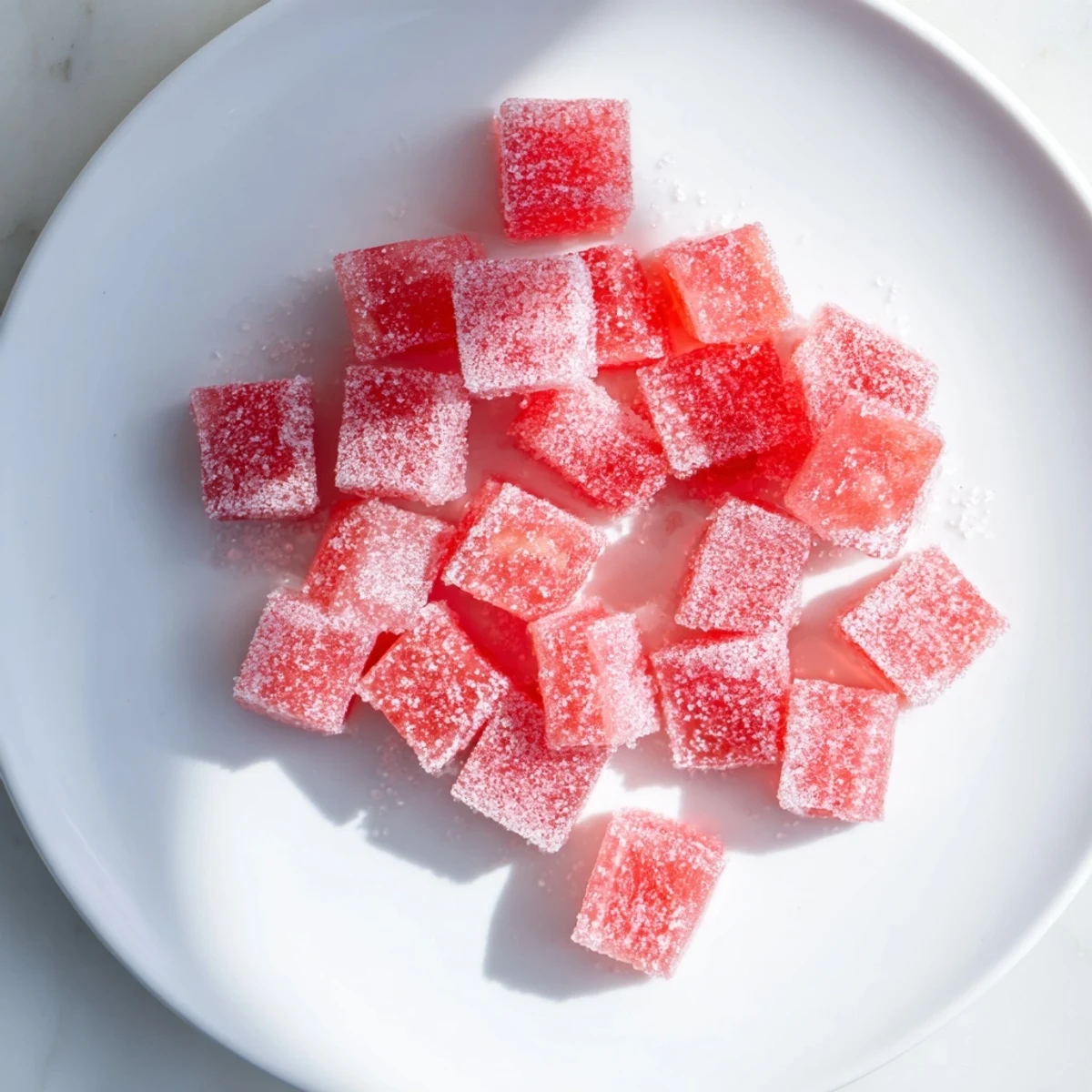 Save
Save My niece now asks for these every time she visits. She has started helping me cut them, though more pieces end up in her mouth than in the storage container. Watching her inherit this recipe feels like passing down something more valuable than just candy.
Getting the Texture Right
The difference between perfect chews and a sticky mess comes down to temperature control. Too much heat breaks down the gelatin, leaving you with syrup instead of candy. I use a candy thermometer now and pull the mixture at exactly 140°F. This small investment in accuracy transformed my results completely.
Flavor Variations
Once you master the watermelon version, the same technique works beautifully with other fruits. Strawberry and lime create a classic combination, while peach with extra citric acid mimics those sour gummy peaches from the store. Each fruit has slightly different water content though, so you may need to adjust gelatin slightly.
Storage and Serving Ideas
These chews develop their ideal texture after sitting overnight. The initial bite is softer, then they firm up beautifully. Layer them between wax paper in an airtight container and keep them away from moisture. I have learned the hard way that a humid kitchen can turn your precious chews into a sticky blob.
- Package these in small cellophane bags for gifts that look professional and taste homemade.
- Try rolling some in regular sugar for kids who find the sour coating too intense.
- Keep the coated chews in the fridge during summer months to maintain their texture.
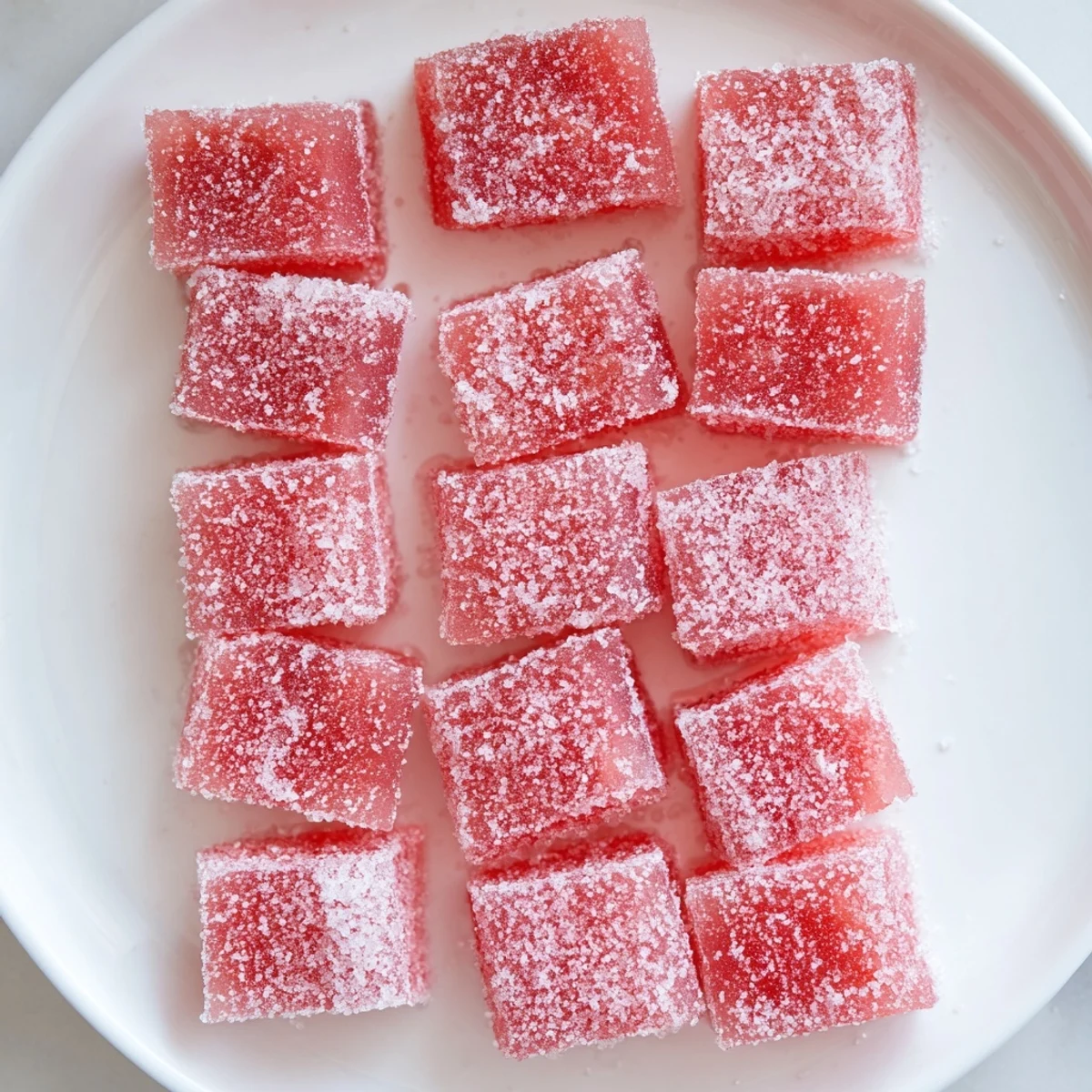 Save
Save There is something deeply satisfying about making candy that people assume you bought. These watermelon chews have become my signature summer treat, the recipe friends request most often, and the first thing I reach for when I want something sweet but not heavy.
Recipe Questions & Answers
- → How long do watermelon chews stay fresh?
-
For optimal texture and flavor, consume these within one week. The sour coating stays crispiest and the chewy texture remains best during this timeframe. Store in an airtight container with wax paper between layers to prevent sticking.
- → Can I make these vegan-friendly?
-
Traditional gelatin isn't vegan, but you can substitute with agar powder. Use slightly less agar than gelatin and follow package instructions for proper setting. The texture will be slightly different but still enjoyable.
- → What other fruits work well?
-
Strawberry, raspberry, peach, mango, and pineapple purees all work beautifully. Adjust citrus juice accordingly—more acid for sweeter fruits, less for naturally tart ones like raspberry or pineapple.
- → Why didn't my chews set properly?
-
This usually means the gelatin wasn't fully dissolved or the mixture boiled, which breaks down gelatin's structure. Ensure gentle heat while stirring until completely dissolved, but never let it reach a rolling boil.
- → Can I reduce the sugar content?
-
Sugar helps achieve the proper texture and acts as a preservative. Reducing it significantly may affect how the chews set and their shelf life. You can experiment with natural sweeteners, but results may vary.
- → Where can I find citric acid?
-
Look in the canning or baking aisle of well-stocked grocery stores, or purchase online. Some pharmacies carry it as well. Fruit preservatives like Fruit Fresh can work as a substitute.