
 Save
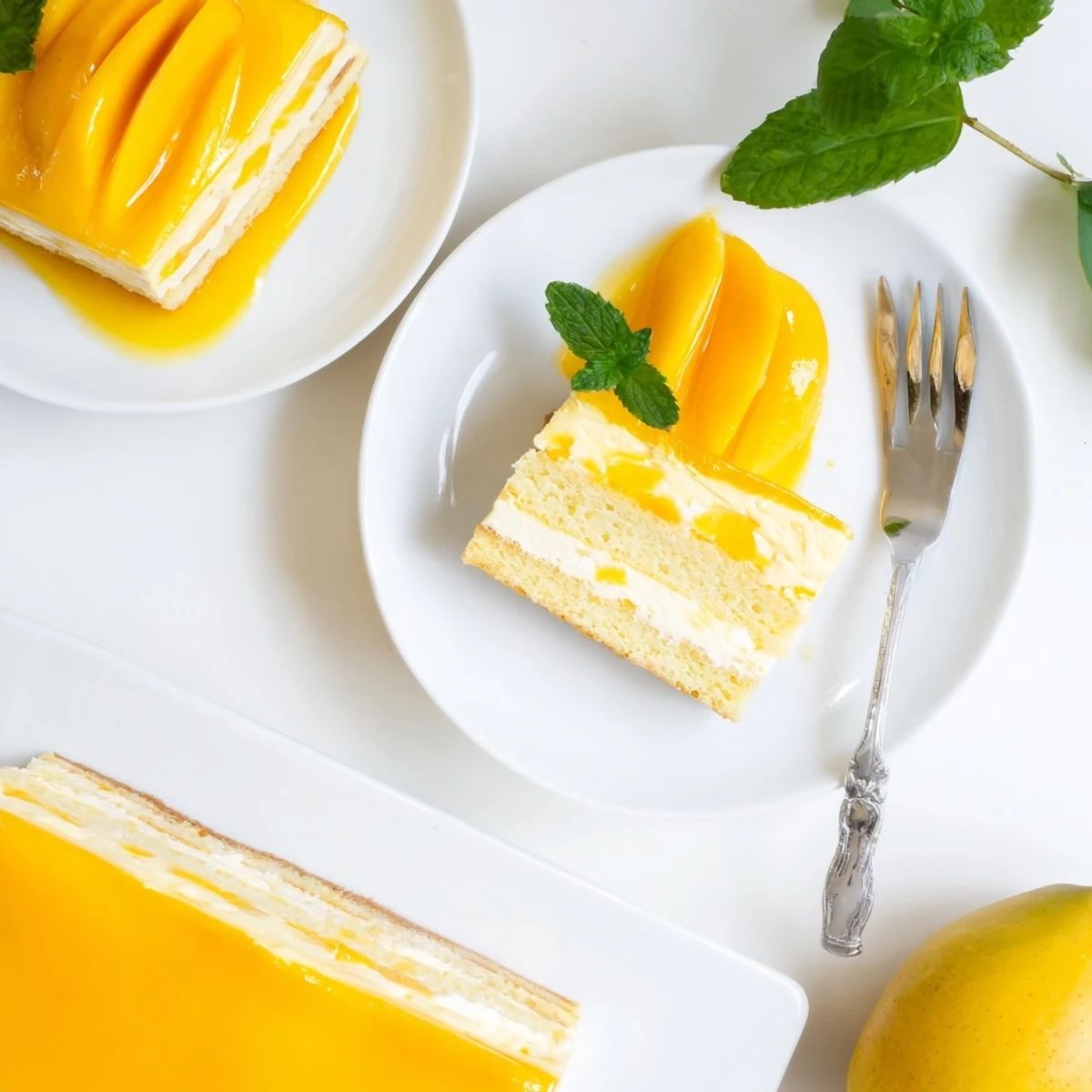
Save This elegant mango mousse cake combines three delightful layers: a tender vanilla sponge base, a cloud-like mango mousse infused with fresh mango puree and whipped cream, and a shimmering mango glaze that adds the perfect finishing touch. The dessert balances tropical sweetness with creamy richness, making it an ideal choice for warm weather gatherings and special occasions. The mousse sets beautifully while maintaining an airy texture, and the glossy topping creates an impressive presentation that will captivate your guests.
The kitchen still smells like summer whenever I make this cake. I first attempted it during a July heatwave, learning that mousse sets faster than you expect when the AC is working overtime. Now it is my go to for bringing something impossibly elegant to backyard gatherings without breaking a sweat in the kitchen.
My sister in law still talks about the first time I served this at her birthday party. I had forgotten to buy fresh mangos for decoration and panicked, but the glossy glaze looked so beautiful on its own that nobody noticed the missing garnish. Sometimes the simplest presentation is the most impressive.
Ingredients
- 3 large eggs: Room temperature eggs incorporate more air and create a lighter sponge that supports the mousse without collapsing
- 90 g granulated sugar: Divided between sponge and mousse layers, this amount provides just enough sweetness without masking the mango natural flavor
- 90 g all-purpose flour: Sifted twice ensures a tender crumb that absorbs moisture from the mousse layer without becoming soggy
- 1/2 tsp vanilla extract: A warm aromatic counterpoint to the bright tropical mango notes
- Pinch of salt: Enhances overall flavor perception and helps stabilize the egg foam
- 400 g ripe mango flesh: The star ingredient, choose mangos that yield slightly to gentle pressure and smell fragrant at the stem
- 60 g granulated sugar: Adjust based on mango sweetness, tart fruits need the full amount
- 2 tbsp lemon juice: Brightens the mango flavor and helps balance the rich cream
- 1 tbsp unflavored gelatin powder: Essential for structure, use powder for easier measurement or sheets if you prefer the professional approach
- 300 ml heavy cream: Cold cream whips faster and holds air better, creating that luxurious silky texture
- 150 g mango puree: Use the same mangoes as the mousse layer for consistent flavor throughout
- 1 tbsp lemon juice: Prevents the glaze from becoming too sweet and adds shine
- 1 tbsp granulated sugar: Just enough to create a mirror like finish while letting mango shine
- 1.5 tsp unflavored gelatin powder: This precise amount creates a glaze that holds its shape but still yields smoothly to a fork
- Fresh mango slices and mint leaves: The crowning glory that tells everyone exactly what they are about to taste
Instructions
- Prepare your canvas:
- Preheat your oven to 180°C and line the bottom of your springform pan with parchment paper. Do not grease the sides as the sponge needs to climb up the pan for proper rising.
- Build the cloud like sponge:
- Beat those room temperature eggs and sugar until the mixture turns pale and triples in volume. Fold in the flour salt and vanilla with the lightest touch you can muster, then bake until golden and springy to the touch.
- Create the mango magic:
- Bloom your gelatin in cold water, then gently warm it just until dissolved. Blend the mango puree with sugar and lemon juice until silky, stir in the gelatin, and fold in whipped cream until you have a cloud of mango perfection.
- Layer and chill the mousse:
- Pour the luscious mango mixture over your completely cooled sponge base and smooth the top with an offset spatula. Let it set in the refrigerator for at least 2 hours, giving it time to firm into that dreamy mousse texture.
- Make the mirror glaze:
- Bloom the gelatin again, dissolve it gently, then mix with mango puree lemon juice and sugar. Let it cool to room temperature before pouring over your chilled mousse layer for that glassy professional finish.
- The grand finale:
- Run a warm knife around the pan edge and release the springform. Arrange fresh mango slices and mint leaves on top like you are decorating a tiny edible masterpiece, then slice and serve this triumph of summer flavors.
 Save
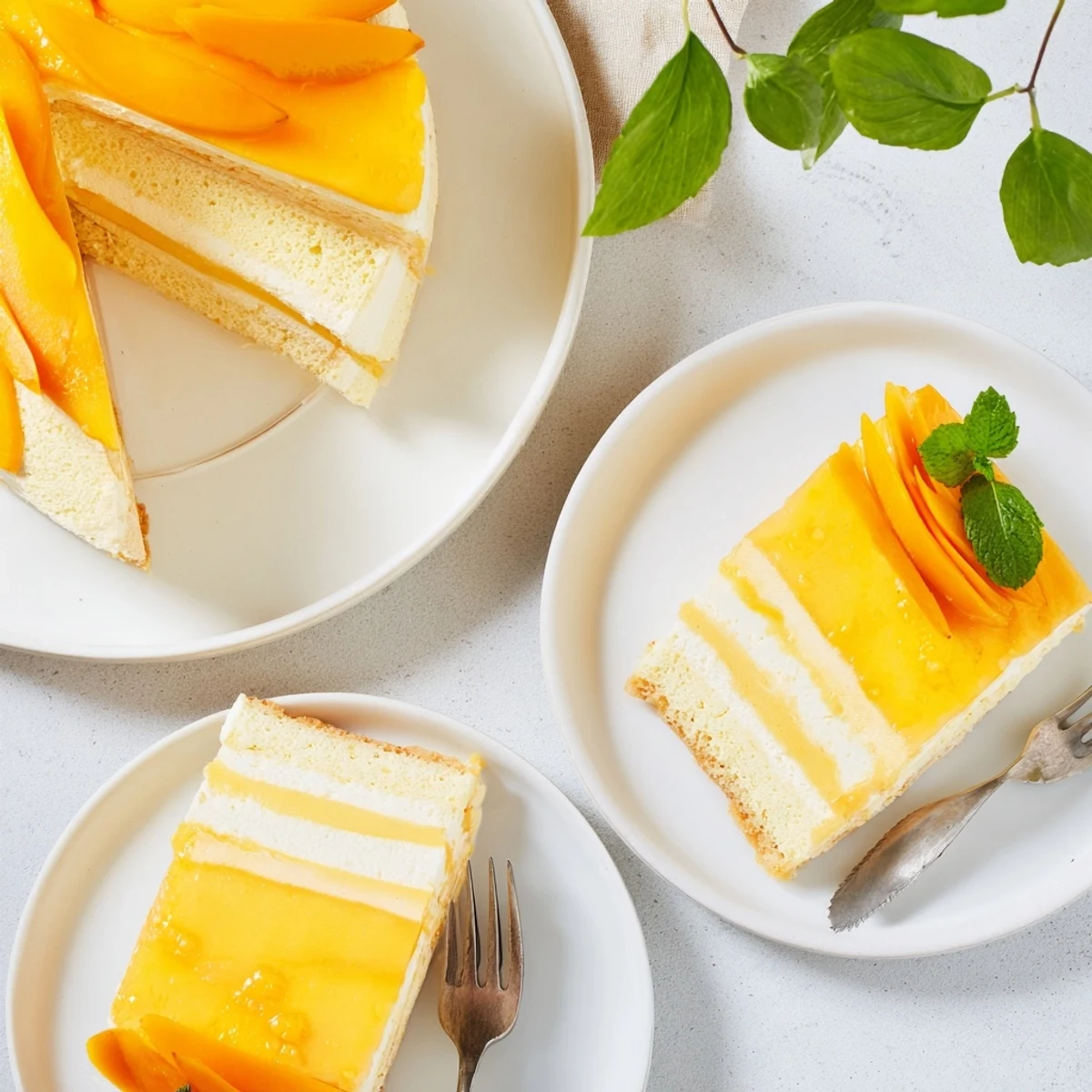
Save There is something magical about slicing into this cake and seeing those perfect layers revealed. My neighbor asked for the recipe after one bite and now makes it for every family celebration, telling everyone it is her signature dessert even though I know she got it from me.
Making It Ahead
This cake actually improves with a bit of patience. I have made it up to 36 hours before serving, storing it uncovered in the refrigerator after the glaze sets completely. The flavors meld and the texture becomes even more luxurious, giving you one less thing to worry about on party day.
Choosing Perfect Mangos
Not all mangos are created equal when it comes to mousse. I have learned that Ataulfo or honey mangos have a buttery smooth texture that purees beautifully without fibrous strings. Give them a gentle squeeze and a sniff at the stem end, the fragrant ones will always yield the most intense mango flavor in your finished cake.
Serving Suggestions
A chilled slice of this cake deserves an equally chilled companion. I have found that Moscato dAsti plays perfectly with the tropical sweetness, though an icy glass of prosecco or even champagne makes any Tuesday feel like a celebration.
- Use a hot knife dipped in water for perfectly clean slices
- Let the cake sit at room temperature for 10 minutes before serving for the ideal texture
- Leftovers keep beautifully for 3 days in the refrigerator, though they rarely last that long
 Save
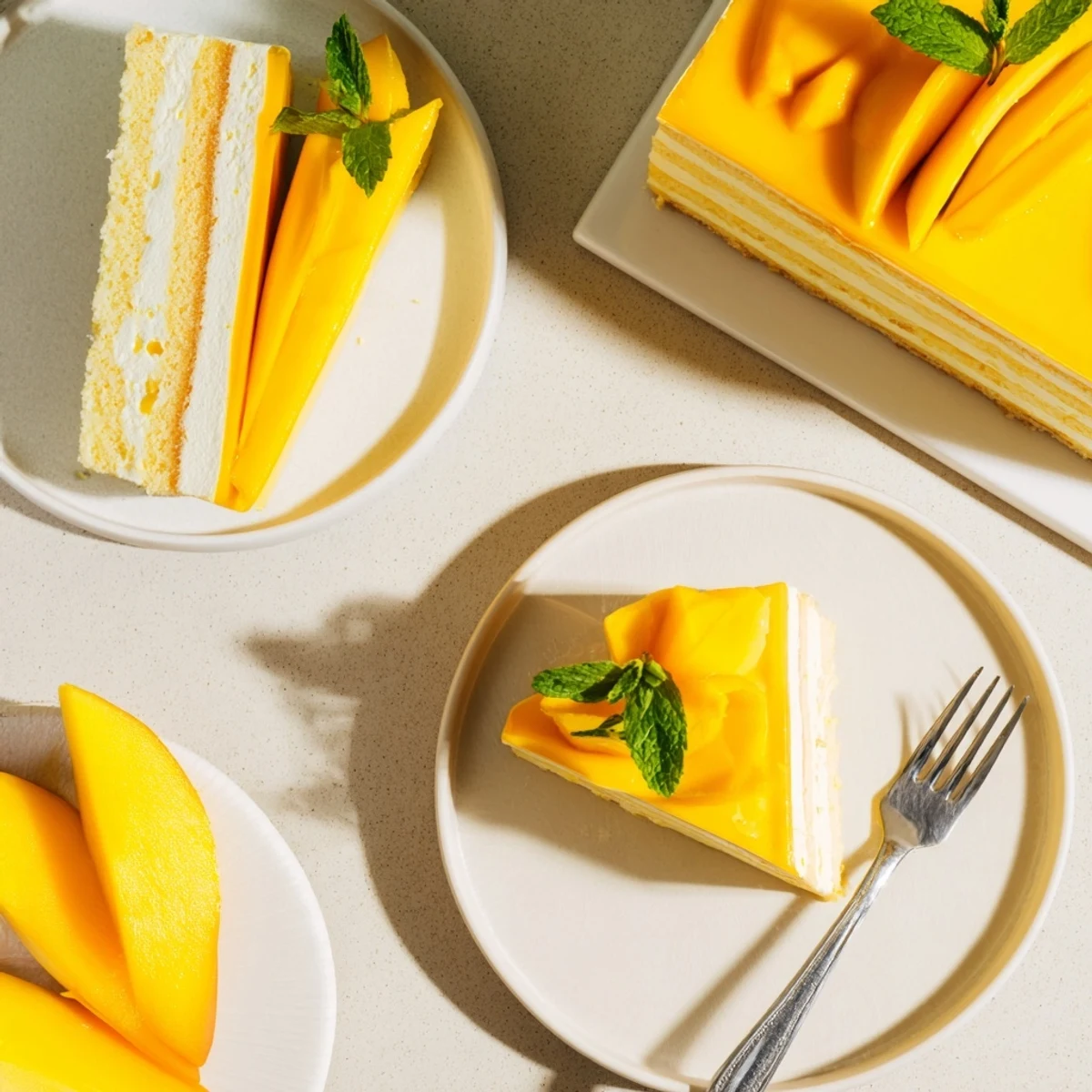
Save Every bite of this cake takes me back to that first summer experiment, now transformed into the dessert everyone requests. Hope it brings the same sunshine to your table.
Recipe Questions & Answers
- → How long does mango mousse cake need to chill?
-
The mango mousse cake requires approximately 4 hours of chilling time. The mousse layer needs at least 2 hours to set properly in the refrigerator, and the glaze requires an additional 2 hours to firm up completely before serving.
- → Can I use frozen mangoes for this cake?
-
Yes, high-quality frozen mango chunks work well when fresh mangoes are unavailable. Thaw the frozen mango completely and drain any excess liquid before pureeing. This ensures the mousse maintains the proper consistency without becoming watery.
- → How do I know when the sponge base is done baking?
-
The sponge base is ready when a toothpick inserted into the center comes out clean, typically after 12–15 minutes of baking at 180°C (350°F). The cake should be golden and spring back gently when touched in the center.
- → Can I make this mango mousse cake gluten-free?
-
Absolutely! Substitute the all-purpose flour in the sponge base with an equal amount of gluten-free flour blend. Ensure other ingredients, particularly the gelatin, are certified gluten-free if needed for dietary restrictions.
- → How long can I store mango mousse cake?
-
The finished cake keeps well in the refrigerator for up to 3 days when stored in an airtight container or covered with plastic wrap. The texture remains optimal, though fresh mango decorations are best added just before serving.
- → What can I use instead of gelatin?
-
For vegetarian alternatives, agar-agar powder can replace gelatin. Use approximately 1 teaspoon of agar-agar powder for every tablespoon of gelatin called for in the mousse and glaze. Dissolve it in hot liquid and let it set slightly before combining with other ingredients.