
 Save
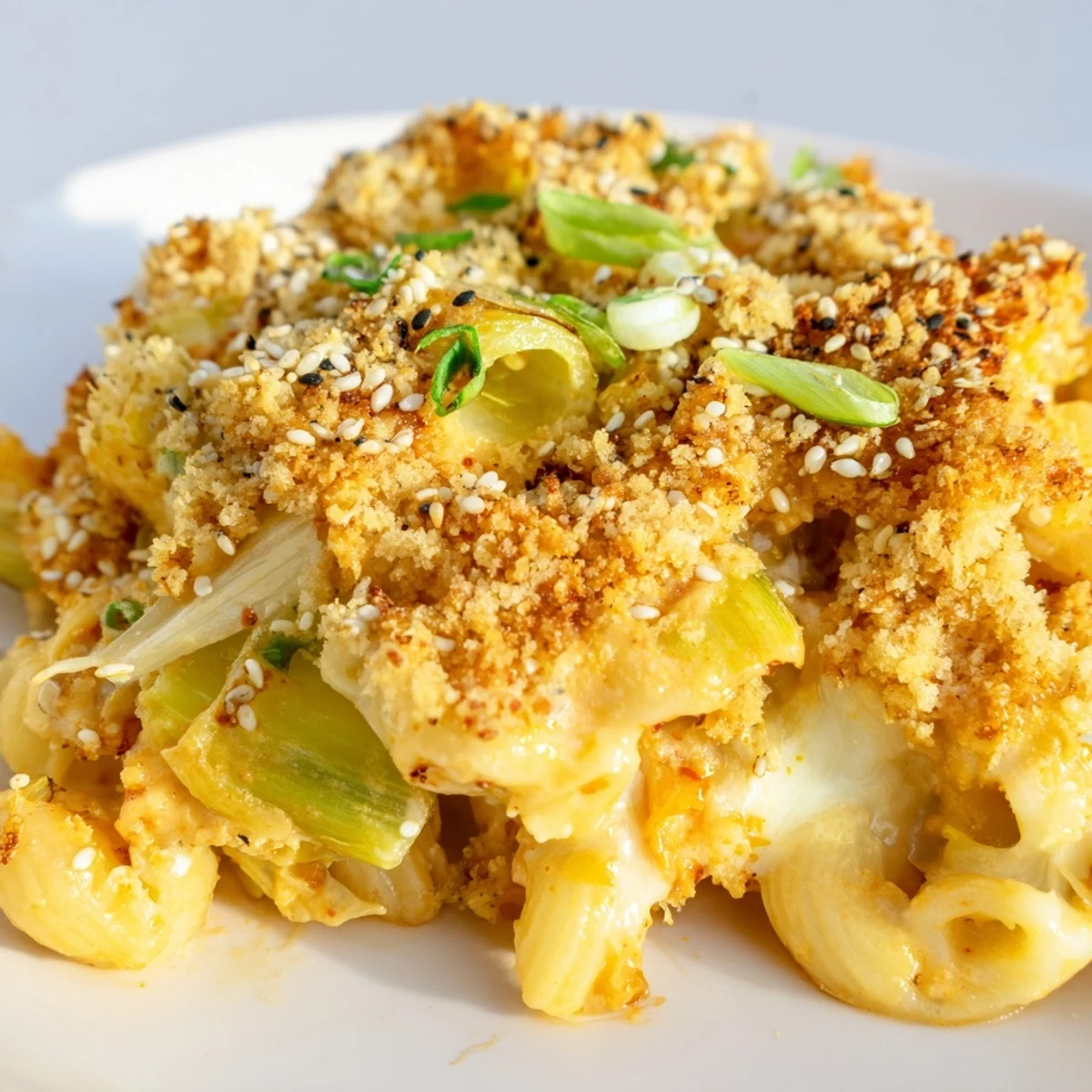
Save This vibrant fusion brings together the ultimate comfort food with Korean flavors. Sharp cheddar and mozzarella create a velvety sauce that coats perfectly cooked elbow macaroni, while chopped kimchi adds tangy, spicy depth and umami richness.
The dish comes together in just 40 minutes, making it perfect for weeknight dinners. The kimchi is folded directly into the cheesy sauce, along with a splash of kimchi juice and optional gochujang for extra heat. A crispy panko and sesame seed topping adds satisfying crunch.
Serve this alongside a crisp Riesling or cold lager to balance the richness. The leftovers reheat beautifully for lunch the next day.
The first time I served this at a dinner party, my Korean American friend Sarah actually got quiet mid conversation, took another bite, and asked if her grandmother had somehow snuck into my kitchen. The kimchi cuts through all that rich cheese in the most brilliant way, turning what could be heavy comfort food into something alive and vibrant. I originally made it on a rainy Tuesday when I had half a jar of kimchi languishing in the fridge and zero desire to cook anything elaborate. Now it is the most requested dish at every gathering, and the way the spicy tanginess mingles with sharp cheddar has ruined regular mac and cheese for me forever.
Last winter my roommate walked in while I was stirring the cheese sauce and complained about the smell until she tasted the final dish and literally ate it standing over the counter. I have learned that people who say they do not like kimchi somehow love this version because the fermentation gets mellowed by all that dairy. My cousin texted me the next day after I served it at Sunday dinner saying her husband had already requested it for his birthday.
Ingredients
- 300 g elbow macaroni: I always cook it slightly less than the package directs because it will continue cooking in the oven and nobody wants mushy pasta in their life
- 2 tbsp unsalted butter: This forms the base of your roux and using unsalted lets you control exactly how salty the final dish becomes
- 2 tbsp all purpose flour: Do not skip this or try to substitute because it is what gives the cheese sauce that silky restaurant quality texture instead of becoming grainy
- 500 ml whole milk: I tried using lower fat milk once and the sauce never properly thickened so save yourself the disappointment and go full fat here
- 150 g sharp cheddar cheese: The sharpness matters because it needs to stand up to the kimchi flavor and mild cheese will completely disappear
- 50 g mozzarella cheese: This adds that incredible cheese pull factor while the cheddar provides the main flavor punch
- 1 tsp Dijon mustard: Nobody will taste this as mustard but it somehow makes the cheese taste more cheesy and bright
- 200 g kimchi: Squeeze out as much liquid as possible before adding because excess moisture will make your casserole soupy instead of creamy
- 1 tbsp kimchi juice: Just one tablespoon adds that fermented depth without overpowering everything else
- 2 spring onions: These add fresh onion flavor that bridges the gap between the kimchi and the creamy cheese sauce
- 1 tbsp gochujang: This is optional but I add it whenever I want extra depth and a subtle background heat that lingers
- 30 g panko breadcrumbs: Japanese breadcrumbs stay crunchier longer than regular ones and create the most satisfying golden crust
- 1 tbsp unsalted butter: Tossing the panko in melted butter before sprinkling is the difference between sad soft topping and glorious golden crunch
- 1 tbsp sesame seeds: These add nuttiness and make the dish look restaurant worthy
Instructions
- Get your oven and dish ready:
- Preheat your oven to 200°C and give a medium baking dish a light coating of butter or oil because nothing is worse than scraping stuck cheese off your pan later
- Cook the pasta:
- Boil the macaroni until it is just barely al dente and drain it well knowing it will finish cooking in the sauce
- Start your roux:
- Melt 2 tablespoons of butter over medium heat and whisk in the flour, letting it cook for a full minute while constantly stirring to remove that raw flour taste
- Make the béchamel:
- Pour in the milk gradually while whisking like your life depends on it and keep stirring until the sauce thickens enough to coat the back of a spoon
- Add the cheese:
- Turn the heat down to low and stir in both cheeses along with the mustard, pepper, and salt until everything melts into the most gorgeous smooth sauce you have ever seen
- Combine everything:
- Fold in the cooked pasta, drained kimchi, kimchi juice, spring onions, and gochujang until every piece of macaroni is coated in that pink tinged cheese sauce
- Transfer to baking dish:
- Pour the mixture into your prepared baking dish and use a spoon to evenly distribute the kimchi throughout so every bite gets some
- Prepare the topping:
- Mix the panko with the melted butter and sesame seeds until the crumbs are evenly coated
- Add the crunch:
- Sprinkle the buttery panko mixture over the top in an even layer that will transform into golden perfection
- Bake until bubbly:
- Bake for 15 minutes until you see the cheese bubbling up through the crumbs and the top has turned golden brown
- The hardest part:
- Let the dish rest for 5 minutes before serving because this gives the sauce time to set slightly so it does not run all over the plate
 Save
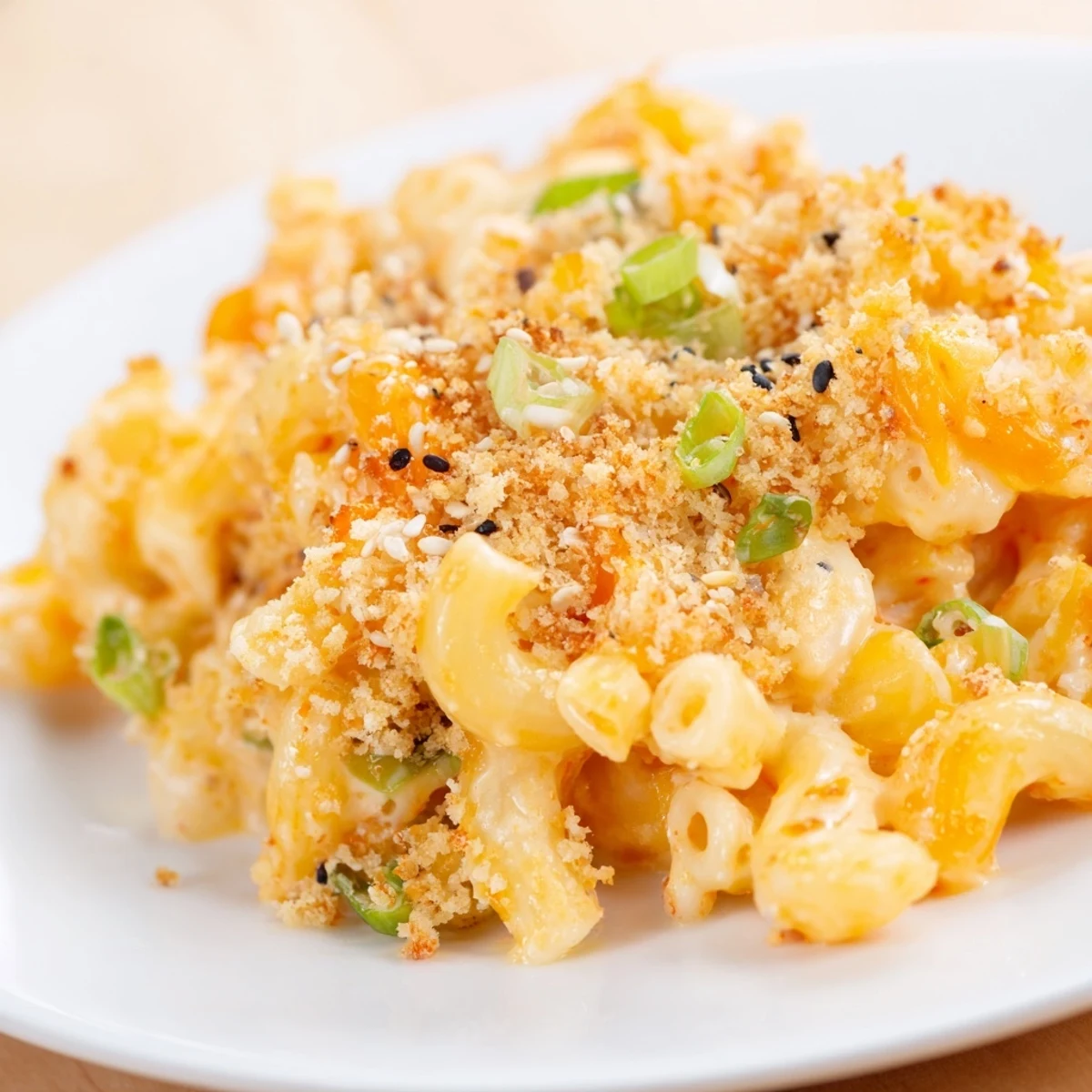
Save This recipe has become my go to when friends are going through breakups or rough weeks because there is something about kimchi and cheese together that feels like being hugged and energized at the same time. I made three batches for my sister's baby shower and the pregnant guests kept going back for seconds despite the strong flavors. The way the kimchi transforms in the oven, becoming milder yet still distinct, makes each bite feel like discovering something new.
Making It Ahead
I have assembled this entire casserole the night before and kept it covered in the fridge with excellent results. Just add an extra 5 minutes to the baking time if it is going into the oven cold from the refrigerator.
Cheese Selection
Sharp cheddar is non negotiable here because mild cheese will completely disappear behind the kimchi. I have experimented with adding gruyère for extra nuttiness and it was incredible but not necessary for a first attempt.
Spice Level Adjustments
The heat level depends entirely on your kimchi since every brand and batch varies so much in spiciness. Start with a milder kimchi if you are unsure and add more gochujang gradually until it reaches your perfect balance.
- Taste your kimchi before adding it to gauge how spicy it already is
- If the final dish needs more acid, a splash of rice vinegar works wonders
- The flavors actually improve after a day in the refrigerator if you have leftovers
 Save
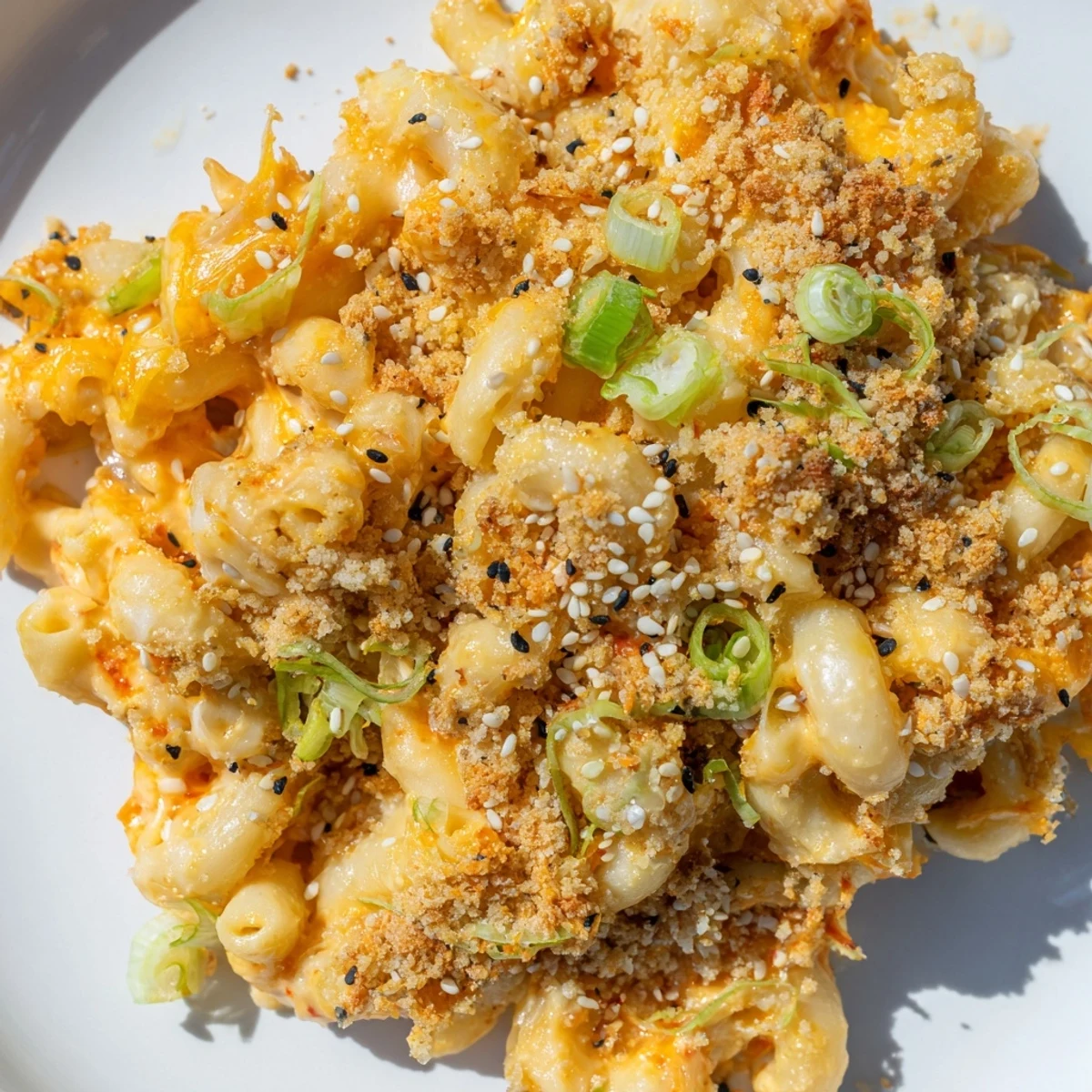
Save I hope this becomes your new comfort food obsession the way it has become mine. There is something magical about how two completely different food traditions can come together to create something that feels simultaneously familiar and brand new.
Recipe Questions & Answers
- → Does the kimchi make this too spicy?
-
Not necessarily. Kimchi provides mild to moderate heat depending on the brand, but its primary contribution is tangy, fermented flavor. The creamy cheese sauce balances the spice beautifully. Add gochujang only if you want extra kick.
- → Can I use different pasta shapes?
-
Absolutely. While elbow macaroni is traditional, cavatappi, shells, or penne work well too. Choose shapes with plenty of surface area for the cheese sauce to cling to.
- → Why drain the kimchi before adding?
-
Excess liquid from kimchi can make the sauce thin and separating. Draining well prevents this while still allowing you to add a controlled amount of kimchi juice for concentrated flavor.
- → Can I make this ahead?
-
Yes. Assemble everything up to the baking step, cover tightly, and refrigerate for up to 24 hours. Add 5-10 minutes to baking time since it will be cold. The topping may need a quick broil at the end to regain crispness.
- → What type of kimchi works best?
-
Mature, well-fermented kimchi offers the deepest flavor. Traditional napa cabbage kimchi is ideal. Avoid overly fresh kimchi as it lacks the tangy complexity that balances the rich cheese sauce.
- → Is this suitable for vegetarians?
-
Most kimchi contains fish sauce or shrimp, so check labels carefully. Many brands now offer vegetarian versions. If using gochujang, verify it's fish-free as well. The cheese and milk can be replaced with plant-based alternatives.